The Trial Lawyer's Journal

TLJ Small Logo
Close
Group 39053677
Share Your Story with Trial Lawyer’s Journal
Trial Lawyer’s Journal is built on the voices of trial lawyers like you. Share your journey, insights, and experiences through articles, interviews, and our podcast, Celebrating Justice.
Stay Updated
Sign up for our newsletter to get the latest from TLJ.


    Changing of the Tide: Law Firm Fee-Sharing and Ownership with Nonlawyers

    by Michael Abdan, Esq.
    Scroll ↓or use arrows ↑↓

    The ability of a lawyer to maintain their professional independence is critical to protecting and serving the public effectively. To this end, the American Bar Association passed Model Rule 5.4 in 1983, restricting an attorney’s ability to share fees and go into business with nonlawyers. The ABA maintained that allowing attorneys and nonlawyers to do business together would naturally create tension between the client’s interest and that of the company.

    In recent years, access to justice barriers have become more apparent, and attorneys are struggling to keep pace with the surge in demand and competition. Instead of attorneys, DIY service providers are arriving on the scene to fill in the gaps, often with little to no attorney involvement and without being held to the same ethical standards as attorneys. Because of this, many states and the ABA are taking a second look at Model Rule 5.4 to see if it might be time for a change.

    The Benefits and Burdens of Restricting Nonlawyer Ownership in Firms and Fee Sharing

    Throughout the years that the current ABA Model Rule 5.4 has existed, many heated debates have arisen around its efficacy and necessity. From the time of the rule’s passage in 1983 to today, the legal profession was far from uniform in its opinion surrounding the ABA’s decision to keep nonlawyers out of the business of law. As the years have gone on, the debate is still steady, but there are shifts in the tide.

    Arguments in Favor of ABA Model Rule 5.4

    Proponents of Model Rule 5.4 argue that it is necessary to insulate the profession against abuse and dilution. Further, they maintain, without keeping lawyers at the helm when it comes to regulating and training those who practice law, the public is at risk of being misled and manipulated.

    Protects a Lawyer’s Professional Judgment and Independence

    Attorneys owe ethical duties to their clients, obligating them to provide competent legal services and sound legal advice tailored to the client’s interests and situation. Having a rule that prohibits nonlawyers and lawyers from sharing legal fees or owning businesses together helps to accomplish this goal.

    In the absence of Model Rule 5.4, attorneys would inherently be influenced by the financial and professional incentives of the partnership with the nonlawyer. This would put the public at risk of being manipulated and misled by unscrupulous attorneys. Furthermore, even well-intentioned attorneys would be subject to the inherent influences of a business relationship with a nonlawyer.

    Keeps Conflicts of Interest at Bay

    As the Illinois Bar Journal pointed out in 2013, the legal profession is a profession, not a business. When providing clients with legal advice and counsel, the attorneys must not feel pressure because of business relationships and financial partnerships. They should be able to fully and freely advise their clients without considering their obligations to shareholders or other parties.

    If lawyers and nonlawyers own businesses, some inherent pressures and obligations come with those structures. Attorneys would also risk having a conflict of interest between what is best for their client and what is profitable for their business and the shareholders. This is a disservice to the attorney, the client, and the public.

    Addresses Regulatory Inconsistencies as to Nonlawyers

    Regardless of what the tabloids may say about the profession, attorneys are held to the highest standard of ethics and professional responsibility. Those who fail to meet these rigorous standards are rooted out and penalized by the highest state court. This is essential to maintaining the profession’s integrity and protecting the public’s perceptions of and trust in attorneys.

    Nonlawyers are not subject to the same regulatory and ethical standards nationwide or within each state. Moreover, the courts do not have the same authority over nonlawyers as they do lawyers. Because of this, it impedes the court’s ability to regulate and address nonlawyer activity that would otherwise be unethical or present a violation of an attorney’s professional responsibilities.

    Arguments Against ABA Model Rule 5.4

    Those who favor a change to the rule argue that the profession’s insular nature renders it irrelevant and its services cost-prohibitive in modern times. They also maintain that the legal field must adapt to modern technologies to stay relevant and not be overtaken by tech companies like LegalZoom.

    Current Rules Make Legal Services Cost-Prohibitive

    The current rules restrict the profession’s ability to grow, thus perpetuating a cost-prohibitive billing system for consumers. Allowing lawyers and nonlawyers to share fees would increase revenue streams for firms throughout the country. The effect would be a reduction in the cost of legal services and an increase in the number of competitive firms.

    Modernizing the Rules Would Increase Access to Justice

    According to the September 2021 report released by the Institute for Advancement of the American Legal System (IAALS) and The Hague Institute for Innovation of Law (HiiL), America’s crisis of access to justice permeates the nation.

    66%
    of the 10,058 study participants had experienced at least one legal problem in the past four years
    51%
    of those legal problems went unresolved during that time

    Approximately 66% of the 10,058 who participated in the study had experienced at least one legal problem in the past four years. About 51% of those legal problems went unresolved during that time.

    If the rules allowed attorneys to share fees with nonlawyers, attorneys could partner with companies like LegalZoom and others to provide affordable legal services. In the absence of these changes, the public must fend for itself or put their faith in DIY services that do not fully advise them on their rights.

    The Legal Profession Must Keep Pace with the Changing Landscape

    With DIY software companies that offer legal services flooding the market, it is not a stretch to say that the walls are closing in on attorneys, and the profession must decide soon or risk becoming irrelevant. Allowing alternative business structures (ABS) between lawyers and nonlawyers can enable attorneys to stay relevant and participate in a landscape that threatens the survival of the legal profession.

    With DIY software companies that offer legal services flooding the market, it is not a stretch to say that the walls are closing in on attorneys, and the profession must decide soon or risk becoming irrelevant.

    How Do the States Feel About Fee-Sharing and Ownership of Law Firms by Nonlawyers?

    Many states have at least considered the possibility of changing the rules surrounding nonlawyer fee-sharing and business partnerships with lawyers. Not every state agrees that allowing nonlawyers to work or share fees with attorneys is the answer, but some have decided to change with the times.

    Arizona

    Rule 5.4 eliminated, August 2020

    On August 27, 2020, the Arizona Supreme Court unanimously voted to eliminate Rule 5.4, which prohibited nonlawyer ownership and fee sharing with attorneys. Arizona allows organizations, such as law firms, to apply for an Alternative Business Structure (ABS) license if they meet specific requirements. Under Arizona rules, only attorneys and authorized legal professionals can provide legal services to the public.

    Arizona created this monumental rule change to respond to the public’s rising interest in allowing lawyers and nonlawyers to form partnerships. The licensing requirement helps increase access to justice while allowing the Arizona Supreme Court to regulate and monitor the profession.

    The program has grown quickly. Arizona had 114 active licensed ABSs at the end of 2024, and in early 2025 the Arizona Supreme Court approved KPMG Law US, making KPMG the first Big Four firm with a subsidiary licensed to practice law in the United States.

    California

    Forbidden by statute, tightened in 2025

    California was slated to join states like Arizona to modernize its current rules and allow nonlawyers to share fees and operate businesses with lawyers. That all changed when the California legislature, which regulates the State Bar of California and attorneys, passed legislation expressly forbidding the practice on September 18, 2022.

    Even so, the bill encourages the State Bar to explore ways to provide limited licenses to practice law to law students, and also to use technology to increase access to justice. For now, however, the question of nonlawyers and lawyers sharing fees or ownership in businesses is off the table.

    California has since gone further. On Oct. 10, 2025, Gov. Gavin Newsom signed AB 931, which bars California attorneys and firms from sharing contingency fees with out-of-state alternative business structures. Fixed and flat fee arrangements are exempt.

    Colorado

    A nonprosecution policy for AI tools

    Colorado’s movement so far concerns technology rather than ownership. In September 2025, the Office of Attorney Regulation Counsel adopted a nonprosecution policy that deprioritizes unauthorized practice of law cases against developers of legal-help technology, provided the developers are supervised by lawyers and the tools clearly disclose that they are not lawyers. The policy is initially set to last three years so the state can evaluate its effects.

    The policy is adjacent to, but distinct from, ownership and fee-sharing reform. Colorado has not adopted an ABS or sandbox program.

    District of Columbia

    Partnerships allowed since 1991

    DC stands alone in that it has, since 1991, allowed nonlawyers and lawyers to form businesses together while still restricting the ability of nonlawyers to receive payment for legal services. But DC’s rules are not without limits: the business relationship between lawyers and nonlawyers must solely or primarily be the provision of legal services. Furthermore, nonlawyers who want to go into business with lawyers must agree to follow DC’s ethical standards and professional responsibility rules for lawyers.

    In April 2026, the D.C. Bar asked the D.C. Court of Appeals to let D.C. lawyers share fees with nonlawyers in firms whose “principal,” rather than “sole,” purpose is providing legal services. On Oct. 15, 2026, the court declined, saying it “was not persuaded that a strong case has been made for the need for the proposed changes,” while noting that it could reconsider the issue.

    Florida

    A unanimous “no,” March 2022

    Florida also took up the question of whether to change its rules and allow nonlawyers to form business partnerships and share fees with lawyers. The answer? A resounding, unanimous “no” in March 2022.

    The Florida Supreme Court did agree with one recommendation of its Special Committee to Improve the Delivery of Legal Services: to allow not-for-profit legal service providers to form a corporation and to allow nonlawyers to serve on the board of directors. Nonetheless, the Florida Bar Association acknowledges that something needs to change in the legal profession to improve access to justice. They are committed to discovering what those changes should be.

    In amendments to Rule 4-8.6 issued Dec. 18, 2025, and effective Feb. 16, 2026, the Florida Supreme Court added not-for-profit authorized business entities as a permitted form of practice. The rule continues to limit who may hold ownership and policy-making roles, and it provides that only a person legally qualified in Florida may direct a Florida lawyer’s legal services or professional judgment.

    Georgia

    Declined, with a nonlawyer pilot proposed

    Georgia declined to allow its attorneys to share legal fees or form partnerships with nonlawyers. That said, the Georgia Supreme Court opened the doors for licensed Georgia attorneys to do business with authorized ABS organizations in other jurisdictions if it is legal in that other jurisdiction. Additionally, the fee arrangement between the Georgia attorney and the ABS must not otherwise violate the Georgia ethics rules.

    Georgia has since considered a narrower step. A June 2025 report to the Georgia Supreme Court recommended a pilot program certifying limited licensed legal practitioners to give limited legal advice and forms assistance in consumer debt and landlord-tenant housing cases. The proposal was still under review in late 2025.

    Illinois

    New limits by statute, August 2026

    In Illinois, the Chicago Bar Association and Chicago Bar Foundation formed a Task Force on the Sustainable Practice of Law & Innovation. The Task Force sought to uncover areas where the legal profession is falling behind, and to develop ways to help the public access legal help when needed. After much deliberation, they issued a report on September 28, 2020, that made recommendations to encourage a more sustainable, modern, and equitable legal profession.

    Despite widespread support and acknowledgment of the underlying assertions of the Task Force, the Illinois State Bar Association rejected the Task Force’s recommendations to explore ways to allow lawyers to “responsibly partner with other disciplines.” Instead, the Illinois State Bar Association drafted the proposed resolution, eventually adopted by the American Bar Association, reaffirming ABA Model Rule 5.4.

    Illinois has since added limits by statute. On Aug. 7, 2026, Gov. JB Pritzker signed HB 5487, which bars entities not owned by lawyers, such as management services organizations, from interfering with attorneys’ professional judgment or hiring decisions and from charging fees based directly or indirectly on a law firm’s revenue, fees or profits. The law reaches firms with less than $300 million in revenue and certain contingent-fee practices, and it can be enforced through private lawsuits.

    Indiana

    A sandbox and nonprofit firms

    Indiana Chief Justice Loretta Rush created the Commission on Indiana’s Legal Future in April 2024 to address an attorney shortage. The commission found that 49 of the state’s 92 counties are legal deserts, with fewer than one attorney per 1,000 residents.

    The Indiana Supreme Court has approved the parameters of a regulatory sandbox modeled on Utah’s program, and its Innovation Committee has outlined a role for allied legal professionals, who would deliver limited services under an attorney’s supervision. A pilot nonprofit law firm is also being built.

    Massachusetts

    Limited fee sharing

    Like many other jurisdictions, Massachusetts has resisted efforts to allow nonlawyers to have an ownership interest in businesses engaged in the practice of law. Where Massachusetts stands apart is its rules surrounding fee sharing between nonlawyers and lawyers.

    Massachusetts’s ethics rules allow a qualified legal assistance organization to share in specific legal fees earned by an attorney for legal work provided to a client referred to the attorney by that organization. This arrangement is permissible if the client is aware of this at the onset of representation and gives informed consent.

    New Mexico

    Shared court-awarded fees

    The New Mexico ethics rules allow lawyers and specific non-profit organizations to share in court-awarded legal fees. The rules allow this fee-sharing arrangement if the non-profit organization “employed, retained, or recommended” the lawyer’s services in the matter.

    New Mexico seeks other ways to expand access to legal services. For example, in 2019, the New Mexico Supreme Court began studying the possibility of allowing nonlawyers to provide legal aid to clients in limited circumstances.

    New York

    Traditional prohibition retained

    New York retains the traditional Rule 5.4 prohibition. In December 2020, the New York courts’ Working Group on Regulatory Innovation concluded that alternative business structures should not be permitted in the state at that time, while recommending that an ABS model be reconsidered if the experiments in Arizona, Utah and elsewhere succeed.

    In March 2026, the U.S. Supreme Court declined to hear Upsolve v. James, a nonprofit’s challenge to the state’s unauthorized practice of law rules.

    North Carolina

    Studying a regulatory sandbox

    The North Carolina State Bar’s Subcommittee to Study Regulatory Change began meeting in June 2020. Its January 2022 final report recommended pursuing limited licensing and a regulatory sandbox, and exploring changes to permit alternative business structures and fee sharing with nonlawyers.

    The State Bar then said it would create an Access to Justice Committee to study the recommendations further. No rule change has been adopted.

    South Carolina

    ABS co-counseling barred

    In Opinion 25-02, issued March 13, 2026, South Carolina’s Ethics Advisory Committee concluded that the state’s lawyers may not serve as local co-counsel with, split fees with or own an interest in an Alternative Business Structure that has nonlawyer owners. The committee said the structure of the split does not matter: If legal fees from South Carolina matters reach nonlawyers through an ABS, the arrangement violates Rule 5.4.

    The opinion is advisory and does not carry binding authority.

    Tennessee

    Rule 5.4 kept, October 2026

    The Tennessee Supreme Court took up the question in a docket on regulatory reforms to increase access to quality legal representation, and comments arrived from both sides, including an April 30, 2026, letter from business and defense bar groups opposing nonlawyer ownership.

    On Oct. 2, 2026, the court declined to authorize changes to nonlawyer ownership of law firms or fee sharing, saying it “has not identified sufficient need or support” for them. The court may revisit the issue as more data becomes available.

    Utah

    A sandbox through August 2027

    Task forces within Utah have been studying ways to increase access to justice and modernize the legal profession since August 2018. The hard work and dedication of those groups paid off in August 2020 when the Utah Supreme Court created the Office of Legal Services Innovation. The Innovation Office oversees the regulatory sandbox initiative, where lawyers and nonlawyers find new and creative ways to serve the public’s legal needs.

    Organizations apply with the Innovation Office to form a business providing legal services to the public. The Innovation Office reviews the application and assesses, among other things, the risk level involved in the provision of the named legal services. If the application is approved, that organization can provide legal services to the public and must maintain its registration with the Innovation Office.

    In 2020, the first law firm founded by nonlawyers opened with permission from the Innovation Office. Law on Call allows clients to pay a low-cost monthly subscription fee to have 24/7 access to lawyers via telephone, subject to the terms of the subscription.

    The Utah Supreme Court later extended the sandbox, which is now set to end Aug. 14, 2027. The Institute for the Advancement of the American Legal System reported 20 consumer complaints as of April 2025.

    Washington

    A 10-year entity pilot, December 2024

    Washington has certainly taken steps to encourage access to justice and modernize the legal profession. In 2012, the Washington Supreme Court authorized the creation of Limited License Legal Technicians (LLLTs) to provide affordable legal services to people in limited types of cases. The Washington Supreme Court did not alter its rules prohibiting nonlawyers from sharing fees or owning a legal business with lawyers.

    In 2020, however, the Washington Supreme Court decided to sunset the LLLT program because it did not believe it had the desired outcome. As a result, it is imposing a June 2023 deadline for new LLLT applicants to meet the requirements for a license and take the exam. Time will tell if Washington State decides to revisit this program.

    Washington has since opened a separate path. In December 2024, the Washington Supreme Court approved a 10-year Entity Regulation Pilot, run by the Washington State Bar Association and its Practice of Law Board, that gives approved businesses, nonprofits and multidisciplinary organizations timebound, limited exemptions from the rules governing the practice of law. Applications opened in October 2025, and the court will use the pilot’s data to decide whether to pursue permanent reform.

    The Waves of Change Have Begun to Make an Impact

    The states are taking different paths to address access to justice barriers and modernize the legal profession. While not every jurisdiction agrees with its neighbor about how to address these issues, recent events make it clear that everyone agrees the challenges are a priority. Regardless of where everyone falls in the debate surrounding Model Rule 5.4, what matters is that the profession continues to find practical and innovative ways to advocate for the public.

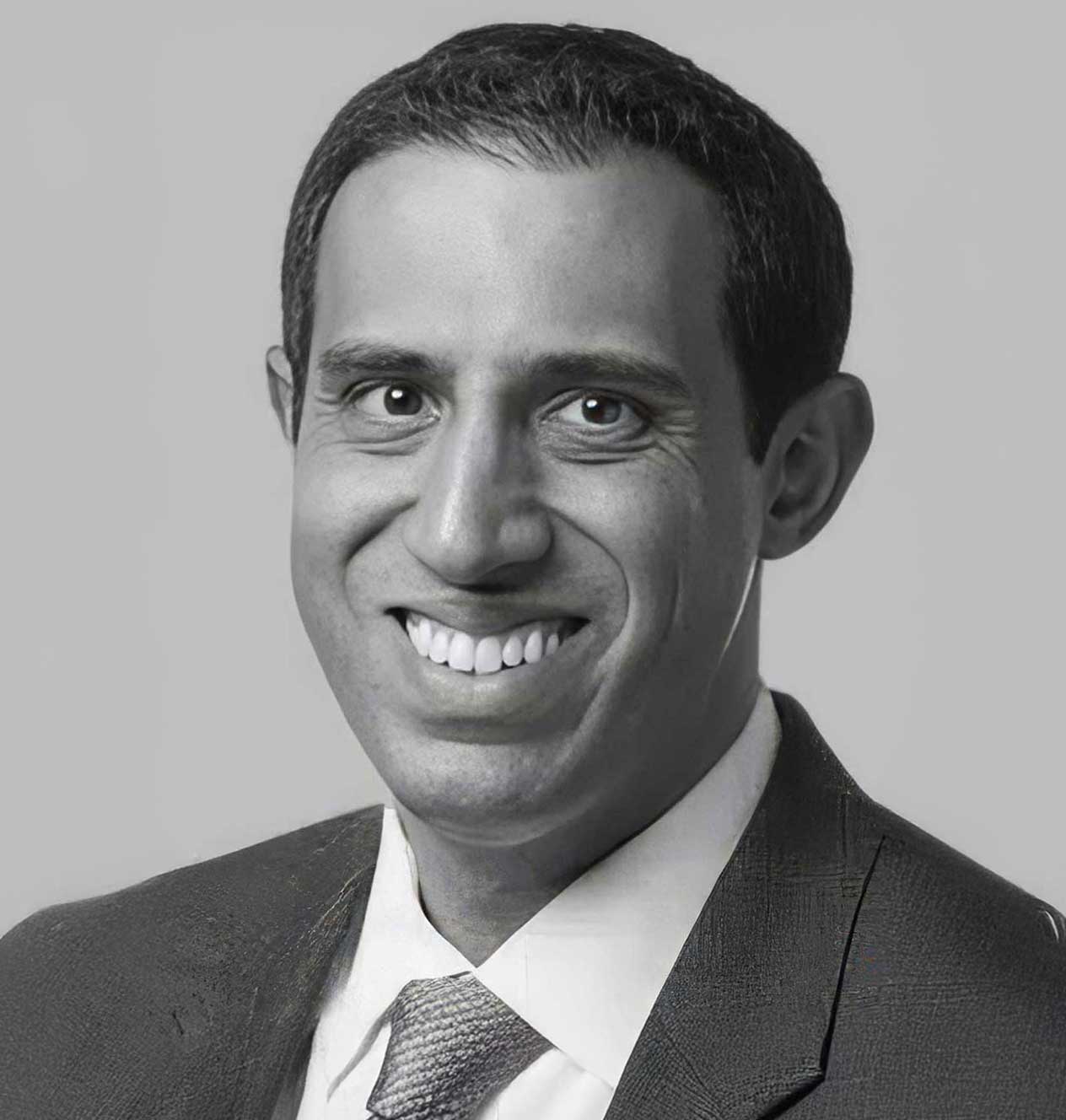
    Michael Abdan

    Michael Abdan, Esq., is a partner at CloudLex. A seasoned litigator licensed in New York and Florida, he has spent the past 10 years helping hundreds of plaintiff personal injury law firms modernize their practices.

    Discover Next

    Insights from PI Experts

    Learn from experts in personal injury about key cases, the business of law, and more insights that shape the future of trial law.

    Author