The Trial Lawyer's Journal

TLJ Small Logo
Close
Group 39053677
Share Your Story with Trial Lawyer’s Journal
Trial Lawyer’s Journal is built on the voices of trial lawyers like you. Share your journey, insights, and experiences through articles, interviews, and our podcast, Celebrating Justice.
Stay Updated
Sign up for our newsletter to get the latest from TLJ.


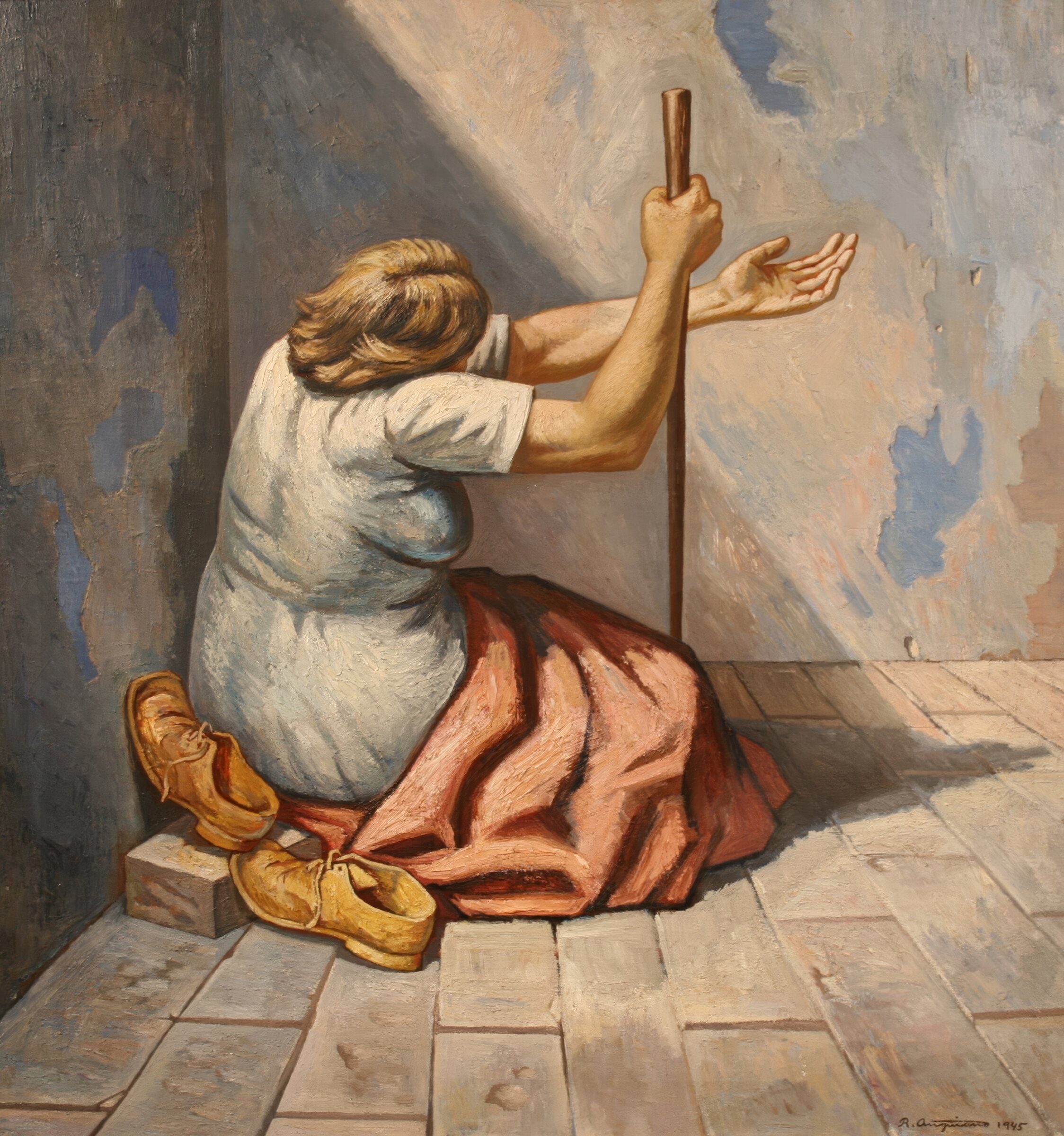
    A kneeling woman in a white blouse and rose skirt grips a wooden staff and holds out an open hand against a sunlit wall, a pair of worn yellow shoes at her side

    “Mendiga”

    Translation: “Beggar”

    Artist Raúl Anguiano (1915–2006)

    Medium Oil on canvas

    Year 1945

    Size 87.6 × 83.3 cm | 34.5 × 32.8 in

    A Labor of Love: Embracing Mexican Heritage Through Art

    A Labor of Love:
    Embracing
    Mexican
    Heritage
    Through Art
    Scroll ↓or use arrows ↑↓

    It didn’t start as a mission. There was no strategy, no collector’s ambition, no investment plan. Just a few family trips, some curiosity, and a desire — quiet but persistent — to reach for something that felt just out of grasp. Over time, that search became one of the most respected private collections of modern Mexican art in the country, and something more: a way to reclaim identity, to learn what wasn’t passed down, and to surround themselves with the culture they were once encouraged to forget.

    “It was frowned upon to speak Spanish,” Los Angeles-based attorney Gina Zapanta recalls of her father’s childhood. “There was a lot of racism going on with Mexicans during the ’50s and ’60s.”

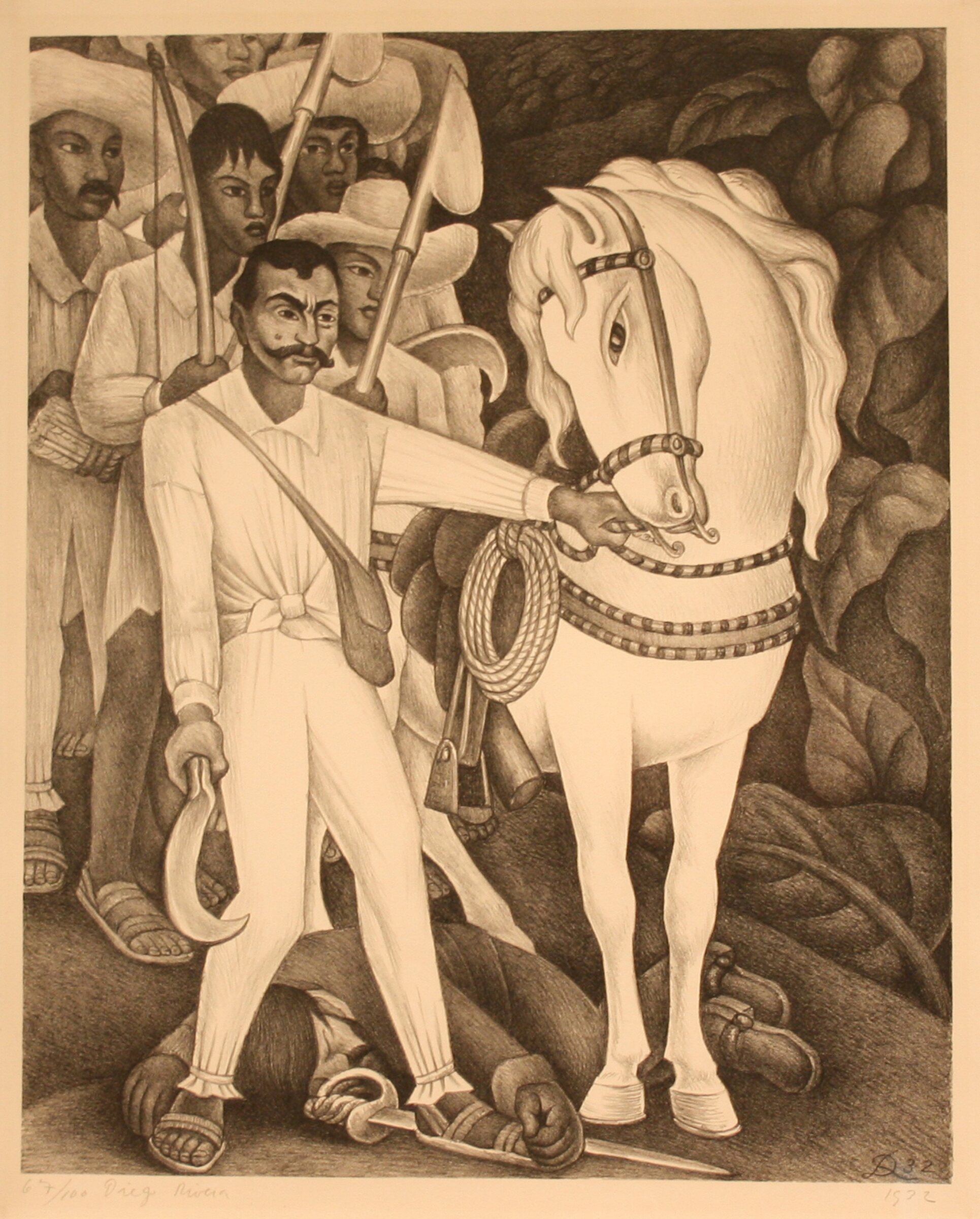
    Lithograph of Emiliano Zapata in white leading a white horse by the reins, armed revolutionaries behind him and a fallen soldier at his feet

    “Zapata”

    No translation

    Artist Diego Rivera

    Medium Lithograph

    Year 1932

    Size 41.1 × 31.7 cm | 16.2 × 12.5 in

    Gina’s father, Dr. Richard Zapanta, was born in Boyle Heights, on the outskirts of East Los Angeles, and came of age in a time in America that made it painfully clear what it valued — and what it didn’t. His parents, like many in their generation, didn’t teach their children Spanish. “We don’t have the traditional ties to Mexico. We didn’t speak the language,” Gina explains. “But my dad made an immense effort to connect — and one of the ways he did that was through art.”

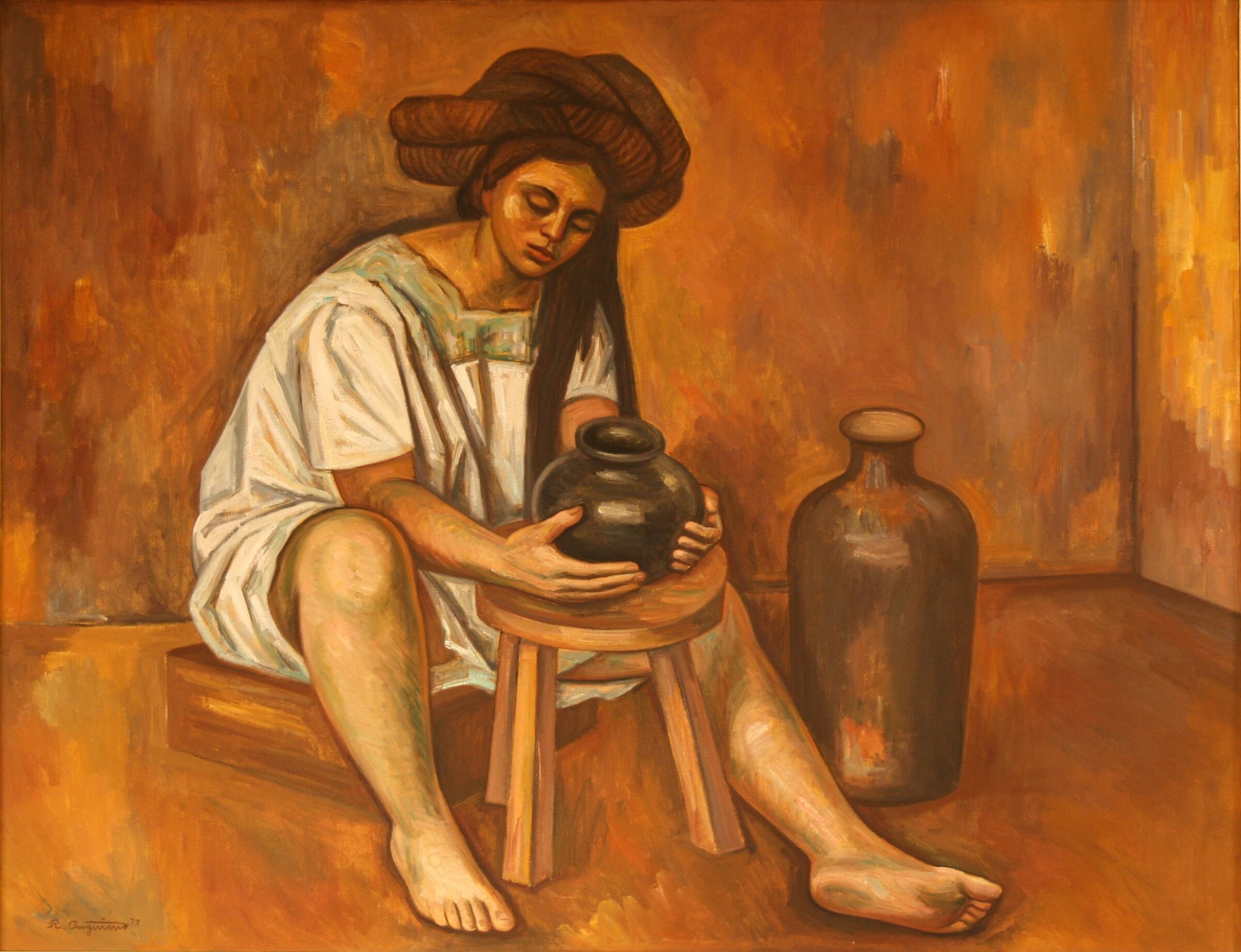
    A seated woman in a white blouse shapes a dark clay pot, a tall jug beside her on a warm orange ground

    “Alfarera”

    Translation: “Potter”

    Artist Raúl Anguiano (1915–2006)

    Medium Oil on canvas

    Year 1977

    Size 100.3 × 130.8 cm | 39.5 × 51.5 in

    Against overwhelming odds — including 15 rejections from medical schools — Richard became a successful orthopedic surgeon. With help from Chicano activists and a scholarship, he eventually graduated from USC Medical School. There, he co-founded the USC Latino Alumni Association — a group that started with a $25 picnic and now raises millions in scholarships.

    It was during these years of personal and professional growth that Richard and his wife, Rebecca, began building what would become the Zapanta Art Collection. “At the time, Mexican art was not trending the way it is now,” Gina says. “My father was intentional with his motives. If the artists were alive, he would make a point to meet them. To support them. To help introduce them to a wider audience.”

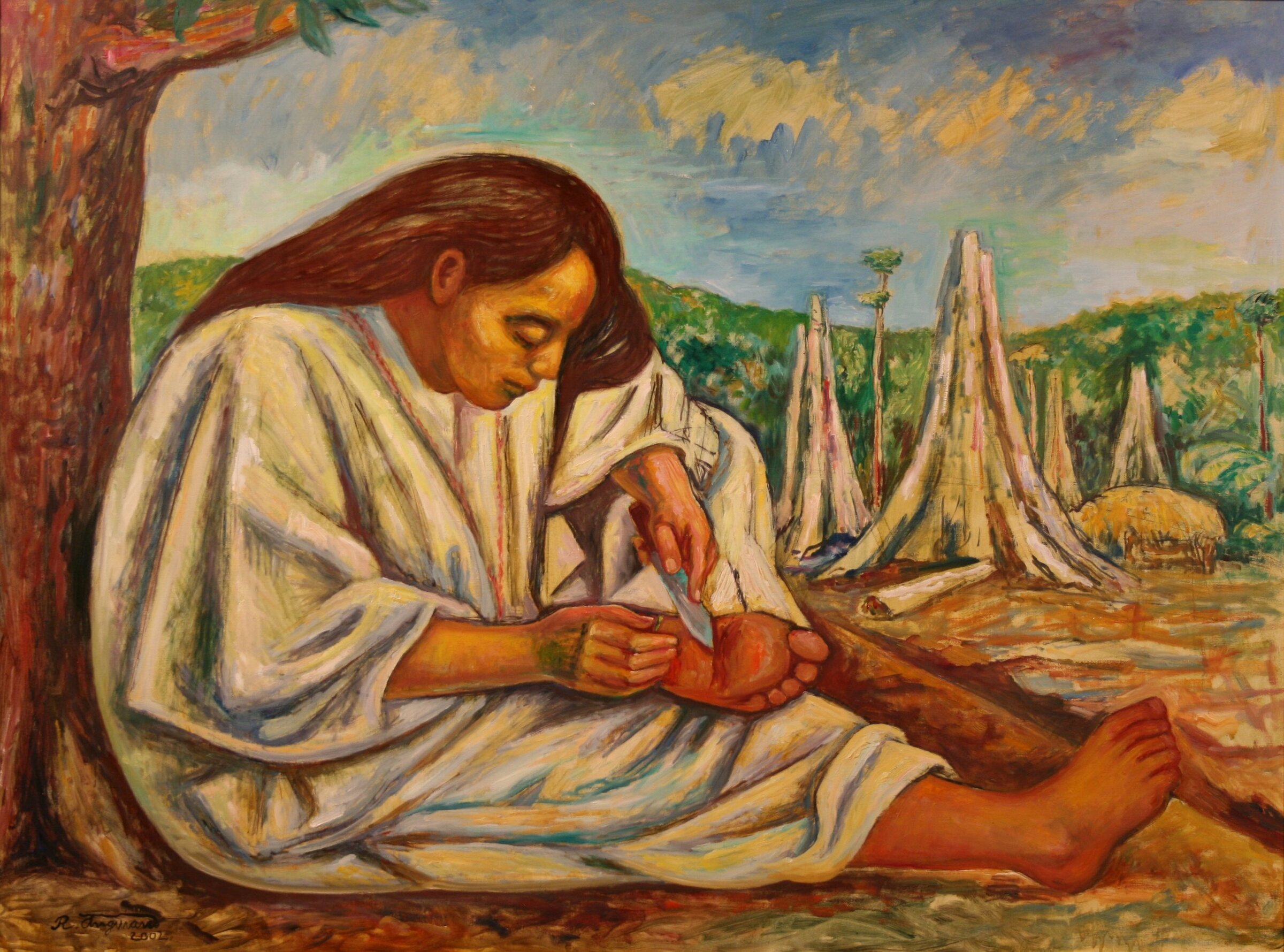
    A woman in a white blouse bends to pull a thorn from her bare foot in a green landscape

    “La Espina”

    Translation: “The Thorn”

    Artist Raúl Anguiano (1915–2006)

    Medium Oil on canvas

    Year 2002

    Size 90.1 × 120.6 cm | 35.5 × 47.5 in

    Soon, those weekend trips evolved into relationships. In addition to buying and commissioning pieces from the artists, Rebecca became somewhat of a private art dealer. “She would represent a lot of well-known and up-and-coming Mexican artists in Mexico. My mom and dad just had this whole thing going on as a fun side project for them, but at the same time, amassing this incredible collection,” Gina says.

    This was no idle hobby. Their home transformed into a vibrant hub — hosting dinner parties, private showings, and gatherings with collectors and creators alike. “To me, it was always just a given that we collected art,” Gina reflects. “I remember having the artists over for dinners and parties, and us going to Mexico and they would host us and we would host them. It was just this beautiful community.”

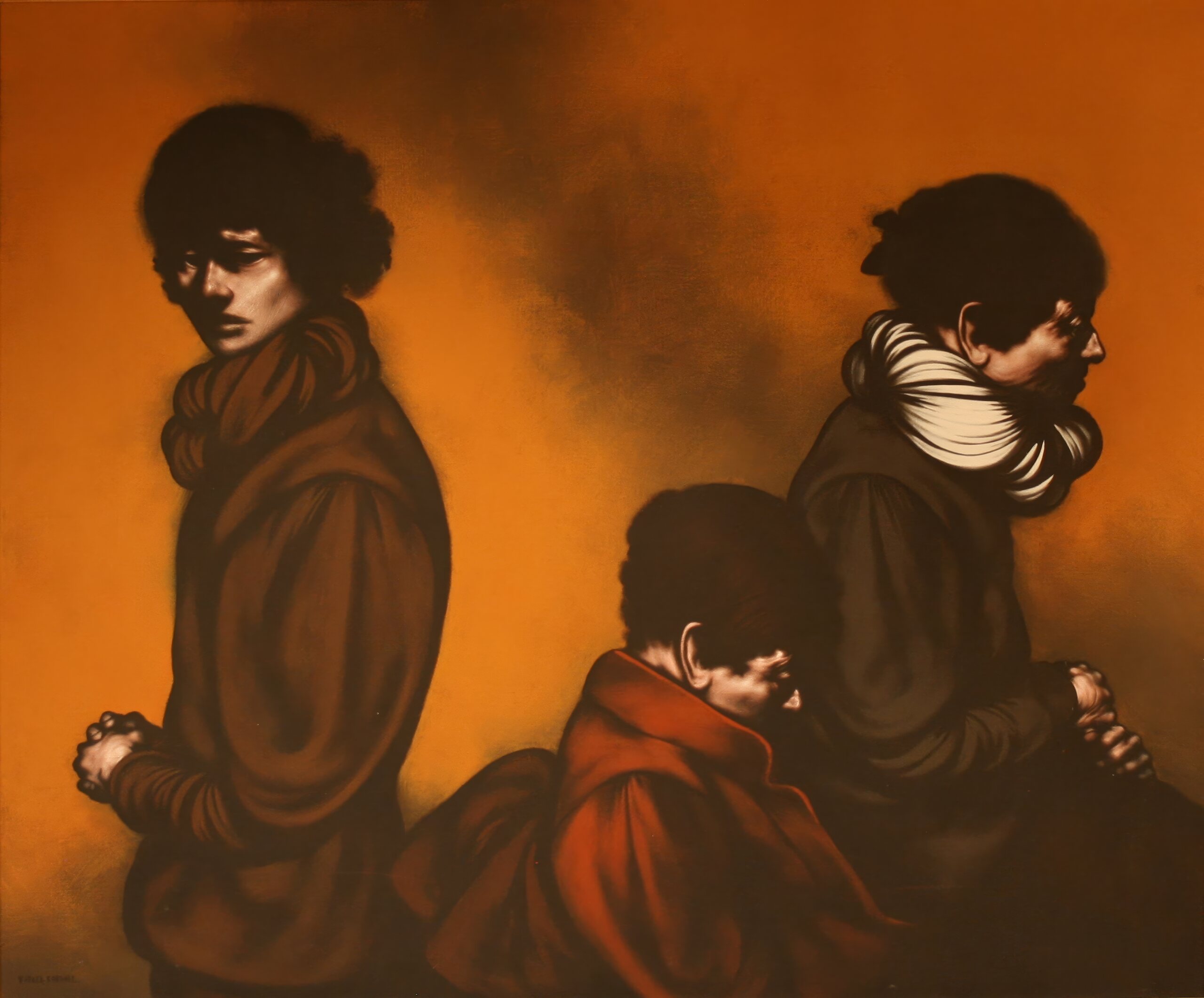
    Three shadowed figures in dark coats against a burnt-orange ground, one wrapped in a white scarf, one hunched in red

    “Carperos II”

    Translation: “Street Performers II”

    Artist Rafael Coronel (1931–2019)

    Medium Oil on canvas

    Year 1980

    Size 123.4 × 148.5 cm | 48.5 × 58.5 in

    One of the family’s closest relationships was with Raúl Anguiano. “He became a very dear family friend. He had a period where he focused on the indigenous tribes in southern Mexico. His work always reflected that beauty.”

    And then there was Rafael Coronel — Gina’s favorite. “There’s a dark painting of a man that I vividly remember from childhood,” she says. “Another one of three men sitting is in my living room now. The richness of those colors just speaks to me.”

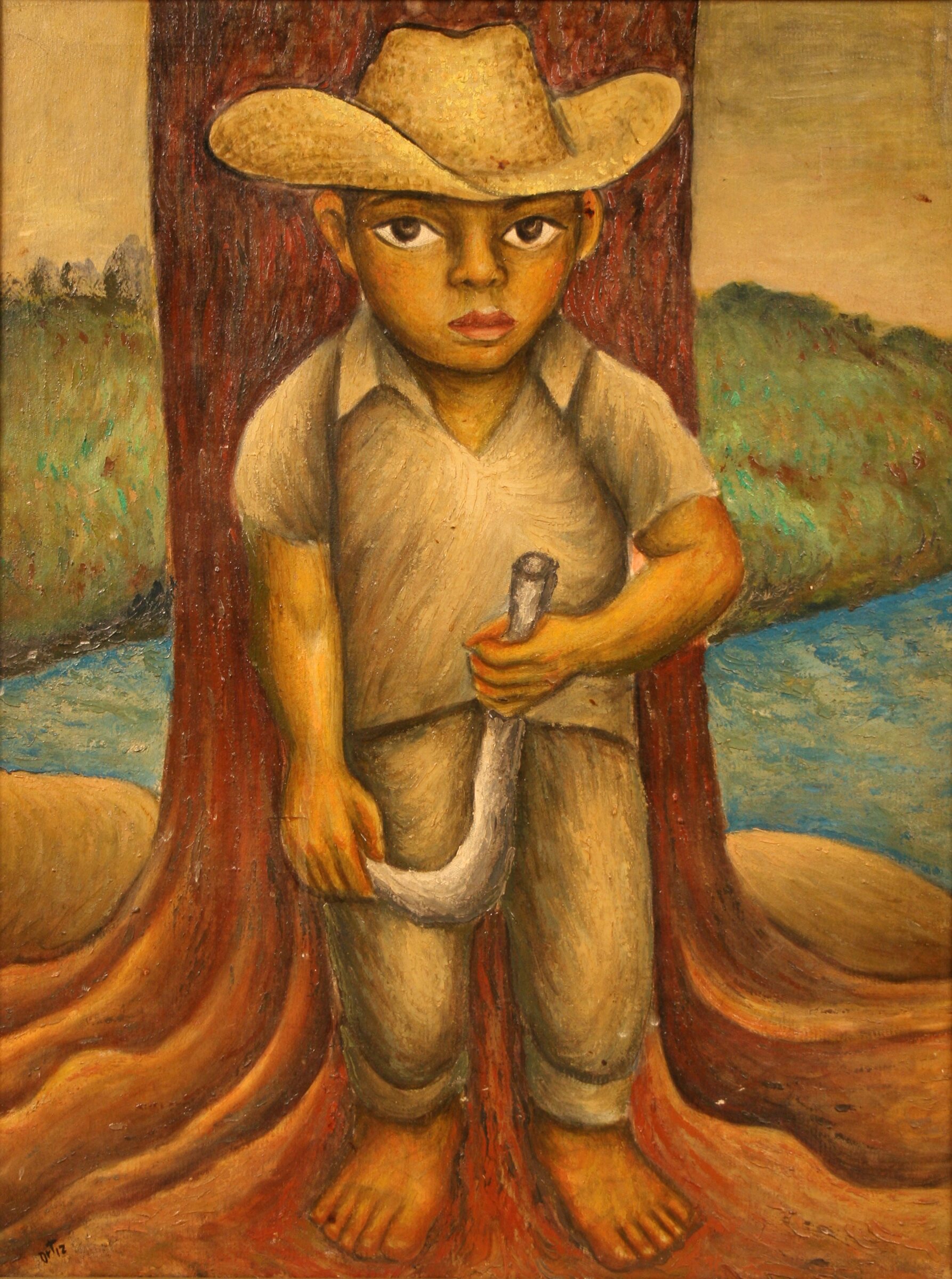
    A barefoot boy in a wide straw hat stands before a tree trunk holding a curved blade, a river behind him

    “Niño”

    Translation: “Boy”

    Artist Emilio Ortíz (1936–1987)

    Medium Oil on canvas

    Year Undated

    Size 62.2 × 47 cm | 24.5 × 18.5 in

    Raúl Anguiano and Rafael Coronel occupy distinct yet deeply influential spaces within 20th-century Mexican art. Anguiano, born in 1915, was part of the second wave of Mexican muralists, following in the footsteps of Diego Rivera and José Clemente Orozco. His work often spotlighted indigenous life and social realism, capturing the complexity of post-revolutionary Mexico with bold lines and grounded narratives.

    In contrast, Rafael Coronel ushered in a more introspective, emotionally charged era. Born 17 years after Anguiano, Coronel’s shadowed figures and ghostly portraits reflect a haunting meditation on identity, aging, and solitude. Textures are heavy, the faces masked in shadow, and yet they speak volumes. Coronel’s style became emblematic of a quieter but equally resonant strain of Mexican modernism — one rooted in personal identity and emotional depth rather than public grandeur.

    This is Mexico.
    This is what our culture is.

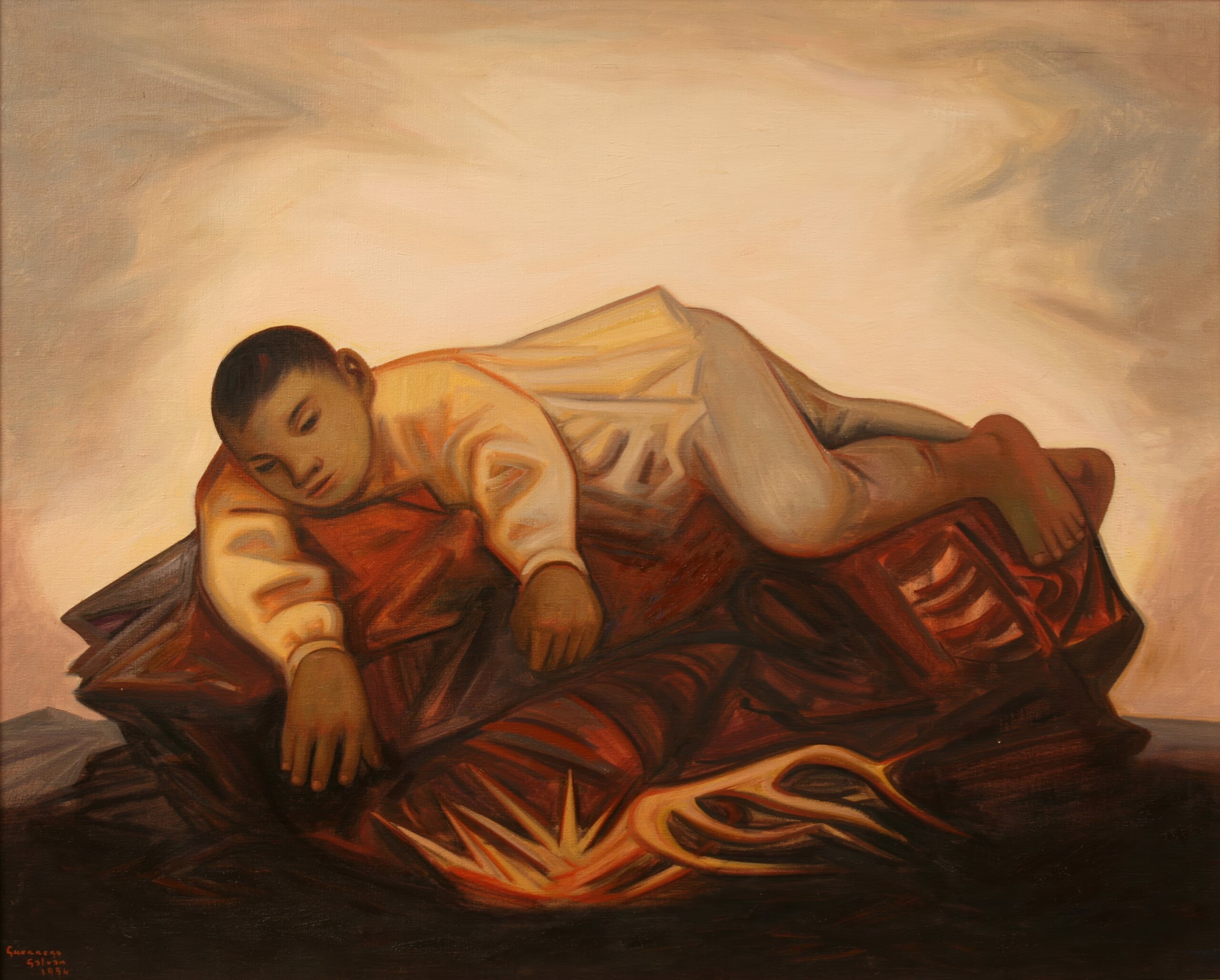
    A boy sleeps sprawled across a heap of red and brown cloth under a pale, cloudy sky, a small fire glowing beneath him

    “Sin título”

    Translation: “Untitled”

    Artist Jesús Guerrero Galván (1910–1973)

    Medium Oil on canvas

    Year 1956

    Size 80 × 100 cm | 31.5 × 39.4 in

    As the Zapanta family collection expanded, so did its reach. What started in Palm Springs galleries led them to New York auction houses. “I distinctly remember flying out to New York to go to Sotheby’s or Christie’s. What a far reach from East LA Boyle Heights to Sotheby’s in New York?”

    Eventually, the collection was exhibited in museums and universities across the U.S. and overseas. It became, as Gina describes, a way to reshape the narrative.

    “My dad wanted to show the beauty and the richness that this culture offered,” Gina says.

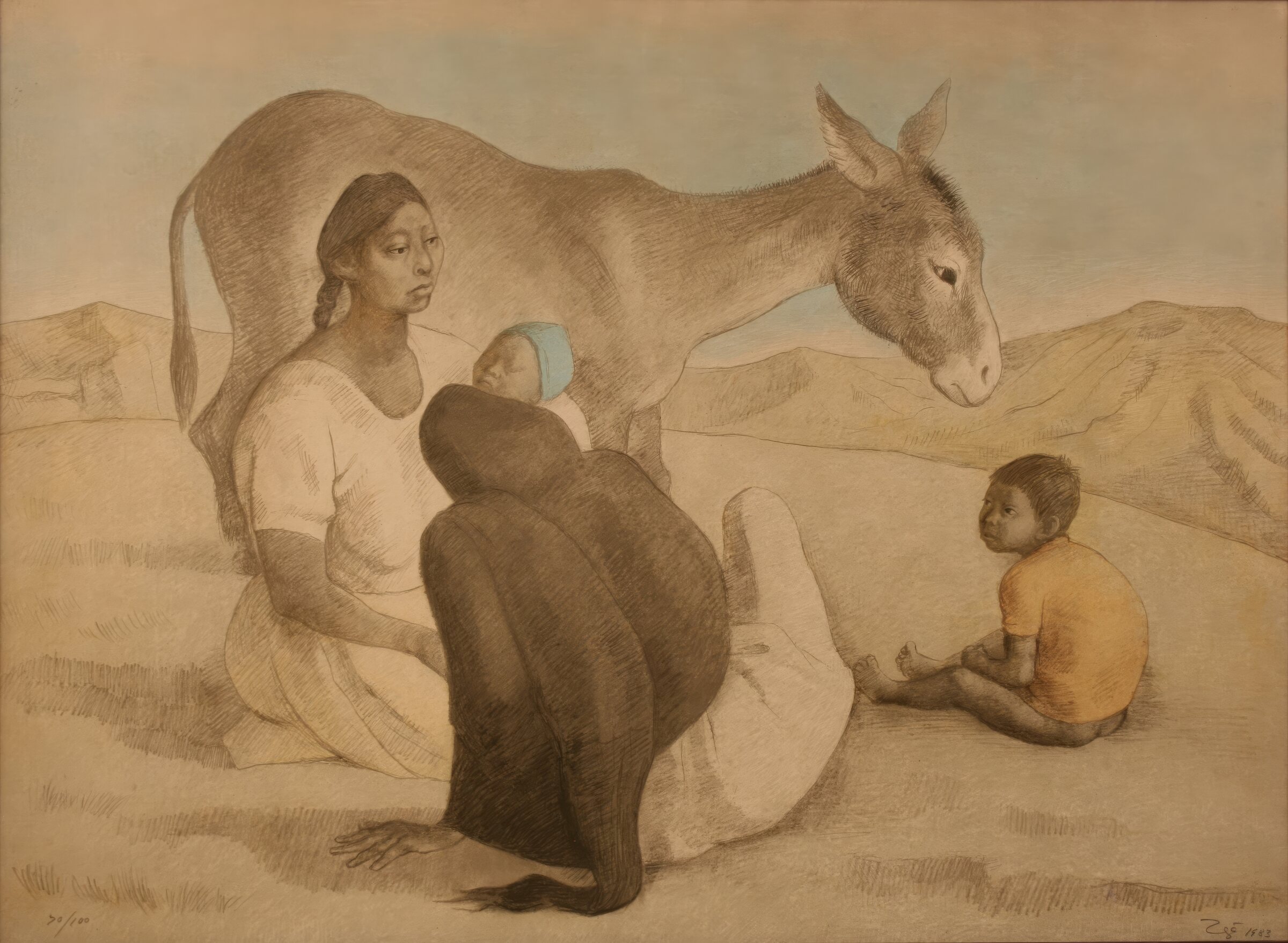
    A mother cradling an infant sits beside a standing donkey while a small child rests on the ground in a pale desert

    “Familia con burro”

    Translation: “Family with Donkey”

    Artist Francisco Zúñiga (1912–1998)

    Medium Lithograph

    Year 1983

    Size 74.9 × 54.6 cm | 29.5 × 21.5 in

    That mission extended even further when Richard brought the collection to the Philippines — home to his grandfather, a Filipino who had been adopted by a U.S. colonel. While visiting a hospital in Makati, Richard approached the Yuchengco Museum with an idea: Would they be interested in hosting a Mexican art exhibit? They were.

    From Manila, the collection went to Hong Kong. But no matter how far it traveled, its soul remained grounded in the Zapanta family. “It was a labor of love, a passion project his entire life,” Gina says. “Because of it, we have this incredible collection to share with the world.”

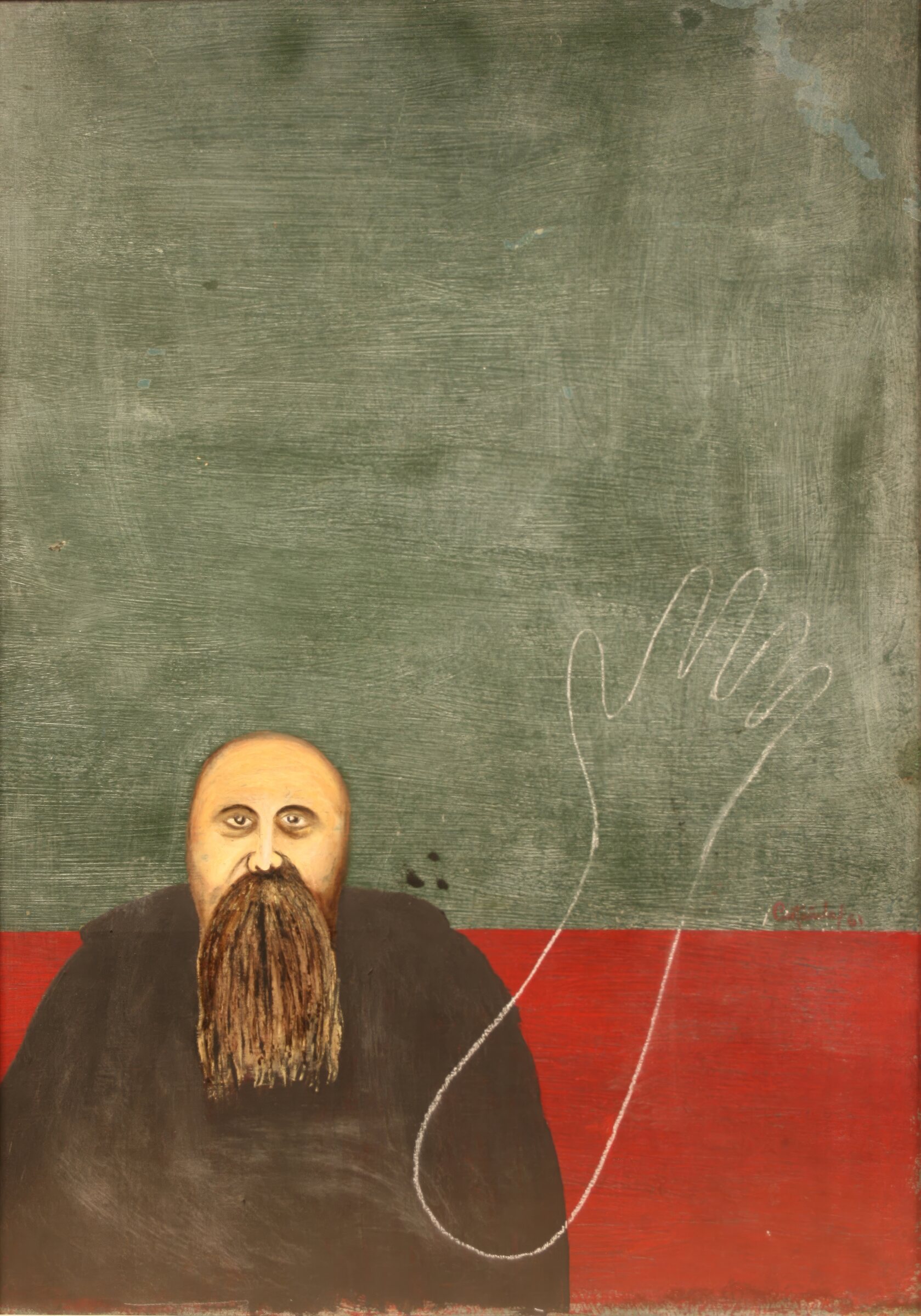
    A bald, bearded man in a black coat stands before a green wall and a red band, the white outline of a raised hand drawn beside him

    “Saludo”

    Translation: “Greeting”

    Artist Alfredo Castañeda (1938–2011)

    Medium Mixed media on board

    Year 1961

    Size 83.1 × 58.7 cm | 32.7 × 23.1 in

    Though she has no immediate plans to expand the collection, her purpose is clear: “At this point, it’s about continuing to showcase it. The art is our way of counteracting the media and these horrible stereotypes — to show you that this is Mexico. This is what our culture is.”

    Gina Zapanta - Trial Lawyer's Journal

    Gina Zapanta

    Gina Zapanta is a Partner/Attorney at Alder Law, PC, in Sherman Oaks, California, and the co-founder of Z.A. Lawyers, a California firm dedicated to the rights of injured workers.

    Micah Gerola

    Micah Gerola is a contributor to Trial Lawyer’s Journal.

    Discover Next

    Insights from PI Experts

    Learn from experts in personal injury about key cases, the business of law, and more insights that shape the future of trial law.

    Authors

    • Gina Zapanta - Trial Lawyer's Journal

      Gina Zapanta is a Partner/Attorney at Alder Law, PC, in Sherman Oaks, California, and the co-founder of Z.A. Lawyers, a California firm dedicated to the rights of injured workers. A member of the State Bar of California and a 2007 graduate of Loyola Law School, she has spent her career advocating for employees and injured people in the Los Angeles area.

      View all posts
    • Micah Gerola

      Micah Gerola is a former Trial Lawyer's Journal intern and a contributor to the publication's website and Print Edition.

      View all posts