

The Trial Lawyer's Journal

TLJ Small Logo
Close
Group 39053677
Share Your Story with Trial Lawyer’s Journal
Trial Lawyer’s Journal is built on the voices of trial lawyers like you. Share your journey, insights, and experiences through articles, interviews, and our podcast, Celebrating Justice.
Stay Updated
Sign up for our newsletter to get the latest from TLJ.


    The U.S. Supreme Court building's portico and pediment

    A Supreme Writing Revolution

    Over the last decade, as the youngest generation skips punctuation and chooses emojis over words, Supreme Court justices have also embraced a more casual writing style. They’re not cutting out apostrophes, using abbreviations willy-nilly, or dropping smiley-faces in opinions—yet. But the justices are relaxing their grammar, shortening words and sentences, and striving to make their writing more accessible.

    Photograph by Joe Ravi, CC-BY-SA 3.0
    Scroll ↓or use arrows ↑↓
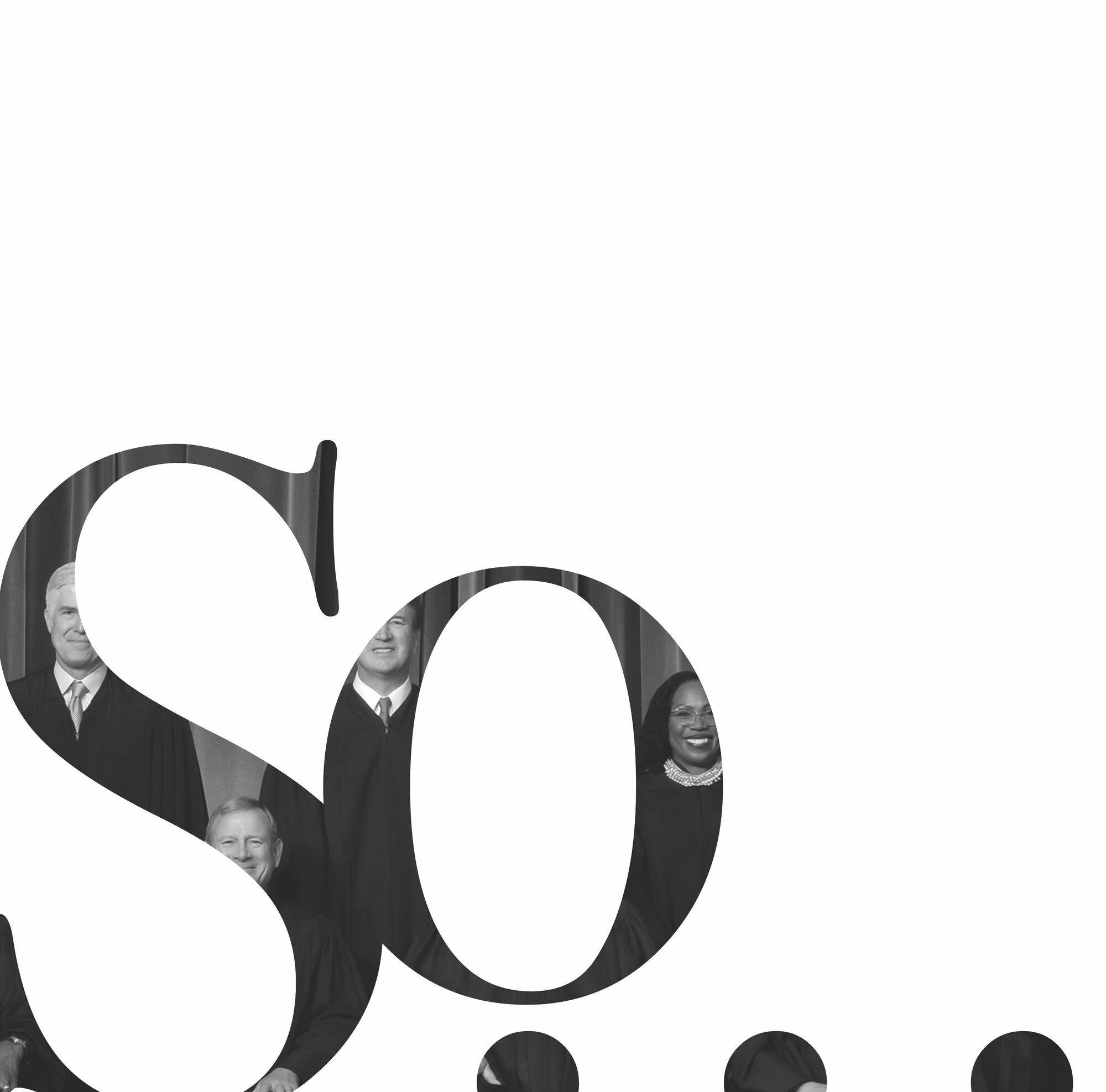
    The word So, its letters filled with a photo of the Supreme Court justices

    To help writers modernize their style, even as writing style evolves, I spent five years studying every U.S. Supreme Court opinion starting in 2018, spanning more than 10,000 pages. I analyzed how the justices treat the most important and interesting points of grammar and writing style. And I uncovered a fascinating reality: writing evolves so rapidly that even the Supreme Court justices sometimes disagree on when to ignore writing tradition and where to hold true to traditional rules.

    5years studying every U.S. Supreme Court opinion starting in 2018
    10,000+pages of opinions analyzed
    30+points of legal grammar and style settled by the majority rule

    Many have vaulted toward informality and use contractions, despite Justice Antonin Scalia’s complaint that they are “intellectually abominable.”2

    Some justices write Congress’ to show the possessive; others write Congress’s. Some use because interchangeably with since; some wouldn’t dare.

    I compiled the findings in my book, The Supreme Guide to Writing (Oxford University Press 2024), where I settled debates on more than 30 points of legal grammar and style by following the Court’s own example: adopting the majority rule. For instance, when at least five of the nine justices use contractions (as they do now), that majority rule prevails. My goal is to give lawyers clear, practical guidelines, so they can avoid costly mistakes—like a $5 million comma debacle in Maine. In that case, lawmakers followed the instruction in the legislative drafting manual to avoid the serial comma—a decision that made a law about overtime so confusing that it led to years of litigation.3

    $5 million What a missing serial comma in a state law listing overtime exemptions cost a Maine dairy company.3

    The following two chapters are excerpts from The Supreme Guide to Writing. They show how to make your writing clearer and concise—by following the lead of the nine esteemed justices sitting on the U.S. Supreme Court.

    20

    Conjunctions

    “In particular, the majority zeros in on the disjunctive conjunction ‘or,’ and proceeds to build its entire opinion around that linguistic feature.”1—Justice Neil Gorsuch

    20.1 Unanimous guiding principle: Start sentences with conjunctions, and choose and, but, or, so, and yet over their longer cousins.

    Writing style choices can stir debate, and one of the more famous disputes was between two greats: William Faulkner and Ernest Hemingway. Faulkner accused Hemingway of lacking courage because he never used words “that might send the reader to the dictionary.” Hemingway’s retort: “Poor Faulkner. Does he really think big emotions come from big words? He thinks I don’t know the ten-dollar words. I know them all right. But there are older and simpler and better words, and those are the ones I use.”2

    The justices habitually follow Hemingway’s lead. As Justice Thomas once advised, “the genius is not to write a five-cent idea in a ten-dollar sentence. It’s to put a ten-dollar idea in a five-cent sentence.”3

    The goal is to achieve clarity and simplicity without losing meaning. “That doesn’t mean that there’s no law in it,” Thomas continued. “But there are simple ways to put important things in language that’s accessible.”4

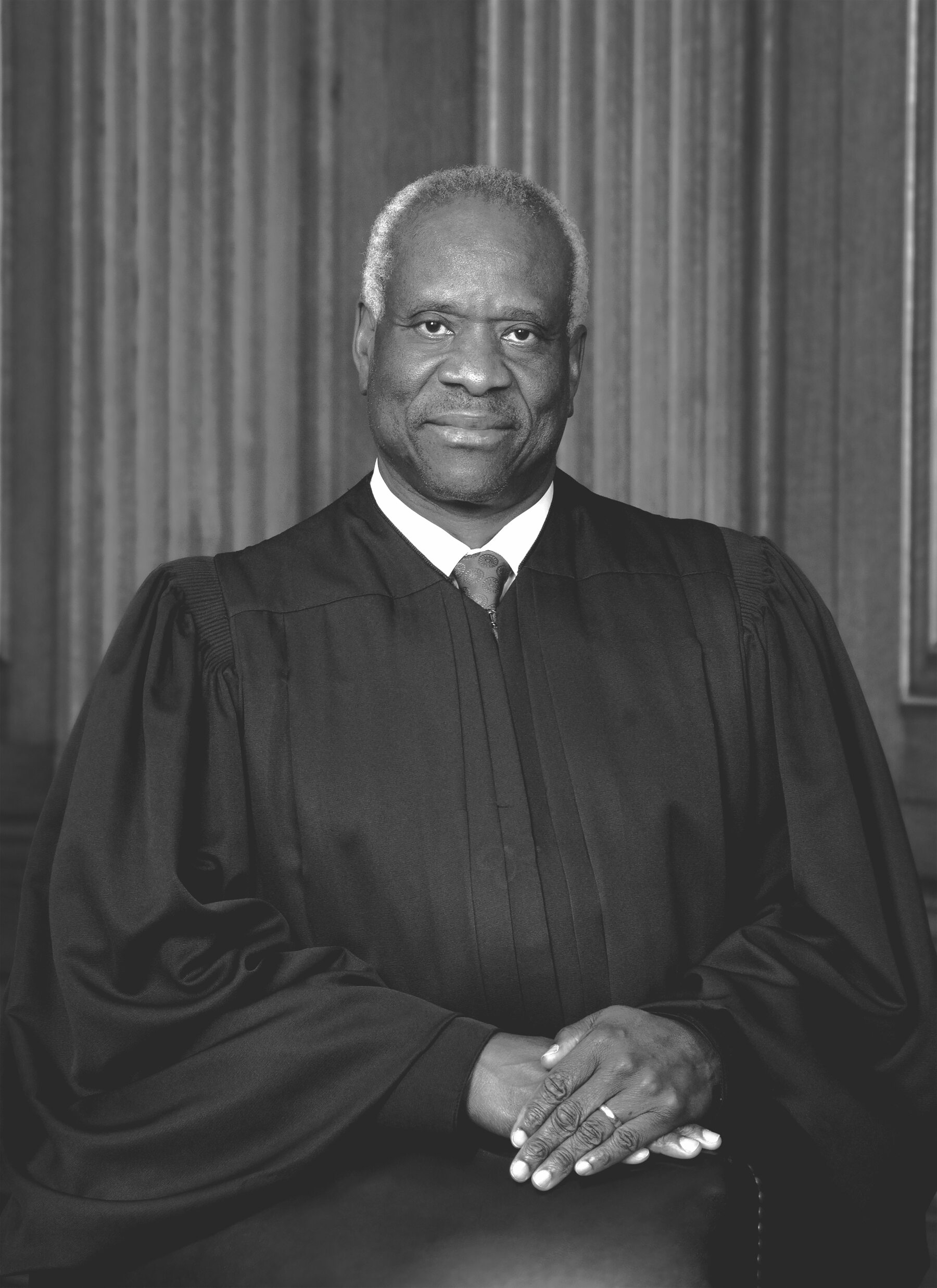
    Justice Clarence Thomas
    “The genius is not to write a five-cent idea in a ten-dollar sentence. It’s to put a ten-dollar idea in a five-cent sentence.”Clarence Thomas

    20.2 Unanimous rule: Use conjunctions, preferably the short ones, to start sentences.

    One way the justices create these five-cent sentences is by starting them with short, punchy conjunctions. All nine sprinkle their opinions with sentences opening with and, but, or, so, and yet. And they opt for these short sentence starters significantly more than longer conjunctions, such as however and nevertheless. Take, for example, Justice Kagan’s simple quips:

    • And that is only the half of it.5
    • But that argument gets things backwards.6
    • Or, because he did not know his conduct broke the law. Or, because he could not control his behavior. Or, because of anything else.7
    • So there is no doubt what Congress meant to accomplish.8
    • Yet one more land dispute loomed.9

    To help prove this point, here she uses three in a row:

    • So there is naturally a section in the immigration laws that specifies how that process works. But nothing in §1184 (or any other section) states that admission is a prerequisite of nonimmigrant status—or otherwise said, that the former is a necessary incident of the latter. And that is what Sanchez needs.10

    Even so, the myth that writers should avoid using these tiny conjunctions to start sentences persists.11 The criticism for so is particularly intense. Some writers argue that so should be shunned—that it’s akin to using well, um, and like, that it’s a crutch puffing up language and undermining the writer’s credibility.12 In speech, so can indicate a verbal tic as much as a transition or connection.

    But in Supreme Court opinions, it works, and shows up frequently, here in the first opinions of Justices Gorsuch, Kavanaugh, and Barrett:

    • So perhaps it comes as little surprise that we now face a question about who exactly qualifies as a “debt collector” subject to the Act’s rigors.13
    • So why waste the time and money?14
    • So the Services shelved the draft opinions and agreed with the EPA to extend the period of consultation.15

    In fact, in five recent years, the justices began 1,221 sentences with so—a noteworthy jump from just a few years ago.16

    1,221

    sentences the justices began with so in five recent years16

    20.3 Unanimous rule: Favor the concise conjunction over the clunky conjunctive adverb, not just at a sentence’s start.

    Lawyers get a bad rap for choosing the esoteric over the easy. First-year law students love to write words like hitherto and thereunto to try to sound more lawyerly, but more experienced legal writers know to opt for unruffled language. That was evident in one of the early cases challenging the 2021 Texas abortion law, where parts of a judicial clerk’s draft order were accidentally published, revealing a “whereby” and other wordy phrases cut from the judge’s final version.17

    Consider a common word like however versus its punchier counterpart, but. The justices used but seven times more than however in five recent years, with but appearing on every page, on average. They start sentences with but at least 1,000 times a term, while however has reached that same starting line only 72 times in five years.

    But appeared seven times as often as however in five recent years.

    And here’s more proof: The justices used yet 856 times, compared to nevertheless (188 times) and nonetheless (216 times) in more than 10,000 pages. And they used the ever-popular so hundreds more times18 than accordingly (349 times), consequently (98), moreover (438), and whereby (13 times with 6 of them in quotes). The takeaway: opt for the easy word nearly every chance you get.

    Times used in more than 10,000 pages of opinions
    yet856
    nonetheless216
    nevertheless188
    moreover438
    accordingly349
    consequently98
    whereby13

    And the ever-popular so ran hundreds more times than each of the last four.

    Choose thisNot that
    AndAdditionally, In addition, Furthermore, Moreover
    ButHowever, Nonetheless, Nevertheless
    OrAlternatively, Conversely, Otherwise
    SoAccordingly, Consequently, Subsequently
    YetHitherto, In spite of that, Thus far
    29

    Short Words—and Sentences

    “If Congress had wanted the provision to have that effect, it could have said so in words far simpler than those that it wrote.”1—Chief Justice John Roberts

    29.1 Unanimous rule: Keep it short.

    In Shakespeare’s time, the average sentence ran nearly 50 words.2 So it’s curious that the era’s most famous writer is known for his short quips: “To be or not to be.” “All that glitters is not gold.” And: “A horse, a horse! My kingdom for a horse!”3

    The same thinking guides the justices’ writing. While they drop some Faulkner-esque sentences in their opinions, most are short—averaging around 18 words.4 What’s more, the vast majority of their words are short, not unlike Shakespeare’s, averaging six letters or fewer.5

    Average words per sentence
    Shakespeare’s timenearly 50
    The justicesaround 18
    Kagan’s dissent opening15

    Justice Kagan’s clever opening in a dissent about a confession typifies that casual tone. The sentences here average just 15 words. Her words average a mere five letters. With each line, Kagan speeds the reader along, showing that good legal writing is simple but not simplistic.

    15words per sentence, on average
    5letters per word, on average

    Imagine a criminal case involving two defendants—John and Mary. John and Mary are arrested for robbing Bill. Before trial, John confesses to the robbery in an interview with police. But John does more than admit his own involvement; he also points a finger at Mary. John says to the police: “Mary and I went out Saturday night and robbed Bill.” Mary, on the other hand, never confesses to the robbery. She maintains that she wasn’t involved—in fact, that she never left her home on the night in question. The government tries John and Mary together. At trial, it introduces a copy of John’s confession into evidence, and has it read to the jury by the interviewing officer. But John elects not to take the stand, leaving Mary’s attorney without an opportunity to cross-examine him about his confession.6

    Kagan says her seemingly effortless, conversational style “takes a ton of work” and time: “Mostly I think writing is really hard,” she told Harvard Law School students in 2017:

    “I do a lot of drafts. I stare at the same paragraph for hours at a time. I can stare at the same sentence for hours at a time. It takes work. It takes time. And you have to be willing to devote it, to in the end, get a final product that looks as though it’s all just flowed from your pen.”7

    Skim any opinion, and there’s no shortage of short sentences shaped by short words. Judges have been known to use seemingly made-up words now and again. (Justice Scalia not only employed “jiggery-pokery,” but also “argle-bargle”8 and “tutti-frutti.”9) But the justices typically opt for a simple, punchy word, over a complex counterpart. The justices take pains not just to prune longer words and sentences from their opinions but also to add variety. Chief Justice Roberts shows just that with this gem: “Bust followed boom.”10 To further illustrate, here are a few of the pithier lines from each of the six authors in a landmark 2023 affirmative action case.11

    • Chief Justice Roberts: So too in other areas of life Universities may define their missions as they see fit. The Constitution defines ours.12
    • Justice Thomas: The stakes are simply too high to gamble.13
    • Justice Sotomayor: No one is fooled.14
    • Justice Gorsuch: There are clear losers too.15
    • Justice Kavanaugh: The dissents suggest that the answer is yes. But this Court’s precedents make clear that the answer is no.16
    • Justice Jackson: History speaks. In some form, it can be heard forever.17
    Jill Barton - Trial Lawyer's Journal

    Jill Barton is a professor and the director of legal writing at the University of Miami School of Law. She has authored three books on legal writing and regularly conducts writing programs for law firms, legal organizations, and the judiciary.

    Notes

    Introduction

    1. Jill Barton is a law professor and author of three books on legal writing. She is a former appellate judicial clerk and an award-winning journalist for The Associated Press and other news organizations. She currently serves as a professor and the legal writing director at the University of Miami School of Law. Her latest book, The Supreme Guide to Writing, was published by Oxford University Press in September 2024. For more, go to jillbarton.net
    2. Alex Carp, Writing with Antonin Scalia, New Yorker (July 16, 2012), https://www.newyorker.com/news/news-desk/writing-with-antonin-scalia-grammar-nerd
    3. O’Connor v. Oakhurst Dairy, No. 16-1901, 2017 WL 957195, at *2 (1st Cir. Mar. 13, 2017) (a missing serial comma in a state law listing overtime exemptions cost a Maine dairy company $5 million).

    Chapter 20

    1. Ford Motor Co. v. Mont. Eighth Jud. Dist. Ct., 141 S. Ct. 1017, 1034 (2021) (Gorsuch, J., concurring).
    2. A. E. Hotchner, Papa Hemingway 69 (1966).
    3. Conor Friedersdorf, Why Clarence Thomas Uses Simple Words in His Opinions, Atlantic (Feb. 20, 2013), https://www.theatlantic.com/national/archive/2013/02/why-clarence-thomas-uses-simple-words-in-his-opinions/273326/.
    4. Id.
    5. Kahler v. Kansas, 140 S. Ct. 1021, 1037 (2020) (Kagan, J.).
    6. Lomax v. Ortiz-Marquez, 140 S. Ct. 1721, 1725 (2020) (Kagan, J.).
    7. Kahler, 140 S. Ct. at 1031 (Kagan, J.).
    8. Allen v. Cooper, 589 U.S. 248, 255 (2020) (Kagan, J.).
    9. Sturgeon v. Frost, 587 U.S. 28, 35 (2019) (Kagan, J.).
    10. Sanchez v. Mayorkas, 593 U.S. 409, 417 (2021) (Kagan, J.).
    11. George Dorrill, “Don’t Begin Sentences with But” Is a Writing Myth, 24 Quarterly 23 (Fall 2002).
    12. Anand Giridharadas, Follow My Logic?, N.Y. Times, May 30, 2010, at WK3.
    13. Henson v. Santander Cons. USA Inc., 582 U.S. 79, 81 (2017) (Gorsuch, J.).
    14. Henry Schein Inc. v. Archer & White Sales, Inc., 139 S. Ct. 524, 530 (2019) (Kavanaugh, J.).
    15. FWS v. Sierra Club, Inc., 592 U.S. 261, 265 (2021) (Barrett, J.).
    16. See Jill Barton, Supreme Court Splits—On Grammar and Writing Style, 17 Scribes J. Legal Writing 33 (2016–17).
    17. Unpublished interim order: United States v. Texas, 1:21-cv-00796-RP (W.D.Tex. Oct. 6, 2021).
    18. Note that so also can be used as an intensifier and in phrases such as “to do so,” and “so-called rule.” In total, so was used 5,246 in five years (including in quotes).

    Chapter 29

    1. Biden v. Texas, 597 U.S. 785, 798 (2022).
    2. See Lucius Adelno Sherman, Analytics of Literature 259 (1893).
    3. William Shakespeare, Hamlet, Act III, Scene 1, lines 55–56 (1601); Merchant of Venice, Act II, Scene 7, line 65 (1605); Richard III, Act 5, Scene 4, line 6 (1591).
    4. James C. Phillips, The Linguistic Style of Justice Ketanji Brown Jackson, 127 Penn. State L. Rev. 1, 10 (2022).
    5. Id. at 11.
    6. Samia v. United States, 599 U.S. 635, 657–58 (2023) (Kagan, J., dissenting).
    7. Harvard Law, A Conversation with U.S. Supreme Court Justice Elena Kagan, YouTube, at 20:40 (Sept. 14, 2017), https://www.youtube.com/watch?v=ZmCTqtrMMXk.
    8. United States v. Windsor, 570 U.S. 744, 799 (2013) (Scalia, J., dissenting).
    9. Sykes v. United States, 564 U.S. 1, 30 (2011) (Scalia, J., dissenting).
    10. Atl. Richfield Co. v. Christian, 140 S. Ct. 1335, 1346 (2020) (Roberts, C. J.).
    11. Students for Fair Admissions, Inc. v. President & Fellows of Harvard Coll., 600 U.S. 181 (2023).
    12. Id. at 204, 217 (Roberts, C. J.).
    13. Id. at 268 (Thomas, J., concurring).
    14. Id. at 363 (Sotomayor, J., dissenting).
    15. Id. at 296 (Gorsuch, J., concurring).
    16. Id. at 316 (Kavanaugh, J., concurring).
    17. Id. at 393 (Jackson, J., dissenting).

    Discover Next

    Insights from PI Experts

    Learn from experts in personal injury about key cases, the business of law, and more insights that shape the future of trial law.

    Author