

The Trial Lawyer's Journal

TLJ Small Logo
Close
Group 39053677
Share Your Story with Trial Lawyer’s Journal
Trial Lawyer’s Journal is built on the voices of trial lawyers like you. Share your journey, insights, and experiences through articles, interviews, and our podcast, Celebrating Justice.
Stay Updated
Sign up for our newsletter to get the latest from TLJ.


    Justice for All Creatures: The ALDF

    Justice for AllCreatures:The ALDF
    Scroll ↓or use arrows ↑↓

    In 2025, corn and soy blanket the terrain of the Illinois farm where Chris Green grew up. However, when thinking back upon his childhood, he sees a young boy surrounded by animals: dairy cows, sheep, and pigs. Growing up around these living beings had an impact on Green, one that awakened him to the souls each of these animals carried — personalities similar to those of humans.

    “Being able to spend the time with the animals and really seeing that they had this value greater than just the weight of their flesh, which is how they were evaluated in the market,” Green said in regard to his early fondness toward the animals he was surrounded by. “Especially the piglets — you’d have a litter of pigs and one would be shy and timid and another one would be exuberant and boisterous. They had a whole range of personalities, just like my friends did. And I really got to see them as unique individuals.”

    This early realization would eventually be the first motivator in leading him on his life journey: fighting for animal rights.

    Justice for All Creatures: The ALDF

    Wu-Tang to Wildlife: A Journey from Concerts to Conservation

    In high school, Green’s love for animals led him in front of a guidance counselor, who announced that, based on his grades, he would be unsuccessful in getting into veterinary school.

    After receiving an environmental science degree from the University of Illinois, Green felt moved at his college graduation in 1990 when Carl Sagan gave a speech focused on environmental issues. This led Green to pursue environmental law at Harvard Law School; however, feeling detached from the legal work, he ended up taking a six-year break to work in the music industry and spend some time reflecting on the career path that was right for him.

    In college, music was a large part of Green’s life. He opened a live music venue with his high school best friend, tour-managed the punk bands Agent Orange and 7Seconds, and played drums and guitar in bands of his own. After graduating, Green continued touring with his college friends HUM, and his roommate Jay Bennett’s band, Wilco.

    Green saw the music industry as a vibrant opportunity presenting itself. He was led down a path of management, overseeing the Indie Stage for the touring Lollapalooza festival and going on some huge tours with the bands Bush and Garbage, as well as the 1997 joint tour with Rage Against the Machine and the Wu-Tang Clan. After finishing his law school classes, he then spent six months working and touring with Jason Newsted from Metallica. Despite the thrill and challenge of that work, Green felt that if he were to go further down that path, something would be poking at his heart, whispering that something was missing.

    “There’s a lot to be said for helping contribute to culture,” Green said. “I just really felt like I needed to be doing something more direct with my time here on Earth to try and make things better for those less fortunate.”

    Returning to the Law To Fight for Animals

    Green once again found himself in the pursuit of going to veterinary school, as he realized helping animals was most important to him. Right around the time he was about to commit, he got a phone call.

    Suzanne Richardson, the Dean of Students at Harvard, was on the other end of the line. She explained that if Green wanted to come back to Harvard Law, now was the time. The administrative board was rolling over, and after six years away, his window to return to law school might be closing soon.

    Green regretfully informed the dean that he would not be returning to law school but rather enrolling in veterinary school to protect and care for animals. Richardson then excitedly told him that Harvard would be offering its first-ever Animal Rights Law course that coming year, taught by Steven Wise — a move so notable that it was reported on the front page of The New York Times.

    Green looked into Wise’s work. He resonated with Wise’s focus on animal rights and the personhood of nonhuman animals, advocating for the similarities between people and other animals. Green realized Wise’s course would align perfectly with his own values and lifelong commitment to animal protection.

    Green decided to pivot and go back to law school. This decision ultimately redirected Green’s professional career toward animal law.

    “If, from a legal point of view, we’re still treating cats and dogs like tables and chairs, pigs and chickens are screwed.”

    Justice for All Creatures: The ALDF

    The Legitimizing of Animal Law Through the Public Lens

    During his second stint at Harvard, Green witnessed a rise in the overall public perception legitimizing animal law. The same year he took Steve Wise’s class, in 2000, Wise published Rattling the Cage, which became a foundational book defining the need for animal law. Wise focused on animals and their cognition and how they were similar to humans, which helped to make the need for animal justice hit closer to home for readers — even Green.

    Green believes in the need for a diversity of approaches when it comes to making a difference, and he especially believes this to be true for animal law. Wise’s approach was crucial to the movement, and Green decided to bounce off that while placing his initial focus on companion animals.

    “I decided to focus on the animals that we’re emotionally closest to,” Green said. “That might be another way of really addressing animal rights because more American households have pets in them than have children. So it’s something that everyone could relate to.”

    Green recognizes that some people may think house pets like cats and dogs are the most loved and pampered animals in the world; when there are billions of other animals getting horrifically slaughtered for food each year, how can you justify taking care of a population that doesn’t need as much attention?

    “If, from a legal point of view, we’re still treating cats and dogs like tables and chairs, pigs and chickens are screwed,” Green said in response to this retort. “It’s going to be a much harder argument to address the sort of hidden cruelty with less charismatic animals if we’re still allowing this other cruelty to occur to some of the most beloved companions.”

    Green refers to a similar argument when discussing the importance of rescuing animals in captivity as well, such as the orcas at SeaWorld San Diego.

    “If we allow such a highly visible type of exploitation to persist, it almost sort of gives license to all the other hidden stuff,” Green said.

    Justice for All Creatures: The ALDF

    The Animal Legal Defense Fund (ALDF)

    The Animal Legal Defense Fund (ALDF) was founded by Joyce Tischler in 1979. Up until this point in time, it has been the first and only organization to focus exclusively on using the legal system to protect the lives of animals and advance their interests.

    Green first joined the ALDF in 2013 as their first legislative director. After working there for two years, he went back to Harvard to help build and launch their Animal Law & Policy Program. Eight years later, he returned to the ALDF, becoming — and remaining — their executive director since 2023.

    “What attracted me to the Animal Legal Defense Fund is that we really do address every type of animal exploitation,” Green said. “If there’s any opening we see to have a legal intervention to help improve their lives, we will consider it and pursue it.”

    He has overseen the development and coordination of strategic initiatives, including:

    • Advocacy

      Individuals passionate about animal protection can find the tools, resources, and platforms they need through ALDF’s advocacy programs. Initiatives like the ROAR social media ambassador program empower people to actively champion the cause.

    • Collaboration

      By partnering with attorneys and pro bono coordinators, ALDF strengthens the reach and impact of animal protection efforts. Legal volunteers gain access to resources that help them create meaningful change.

    • Criminal Justice

      Free legal assistance is available for law enforcement, prosecutors, and veterinarians handling animal cruelty cases. ALDF also engages with state legislatures to shape laws that protect and improve animal welfare.

    • Legal Education

      Law students and professionals can deepen their expertise in animal law through ALDF’s educational programs. In 2008, ALDF helped launch the Center for Animal Law Studies at Lewis & Clark, which serves as a hub for both academic research and hands-on legal practice. ALDF also supports the Animal Legal Education Initiative at George Washington Law School.

    • Legislation

      Local, state, and federal partnerships enable ALDF to advance stronger laws for animals. These legislative efforts target strategic legal gaps and aim to produce lasting change.

    • Litigation

      Lawsuits filed by ALDF hold accountable industries and individuals who exploit or harm animals — whether in factory farming, roadside zoos, or research labs. They also defend animal protection laws under legal threat.

    • Regulation

      Through administrative law, ALDF pushes federal agencies and other governmental bodies to enforce laws and set rules to better implement existing law. These regulatory measures are designed to safeguard animals’ health and well-being.

    The ALDF has several focus areas that they advocate and litigate for, including Animals Used in Research, Captive Animals, Companion Animals, Farmed Animals, and Wildlife.

    Justice for All Creatures: The ALDF

    Animals Used in Research

    Over 1 million animals are used in laboratory experiments across the United States, and many have no legal protections. Animals used in research are subject to painful and horrific experiments — often with no painkillers. Experts even claim that the use of animals in research is not very effective. For all the pain and suffering these thinking and feeling animals experience, the ALDF has been fighting to make a positive impact.

    The Case:

    Demanding Public Records Relating to Invasive Cat Experiments

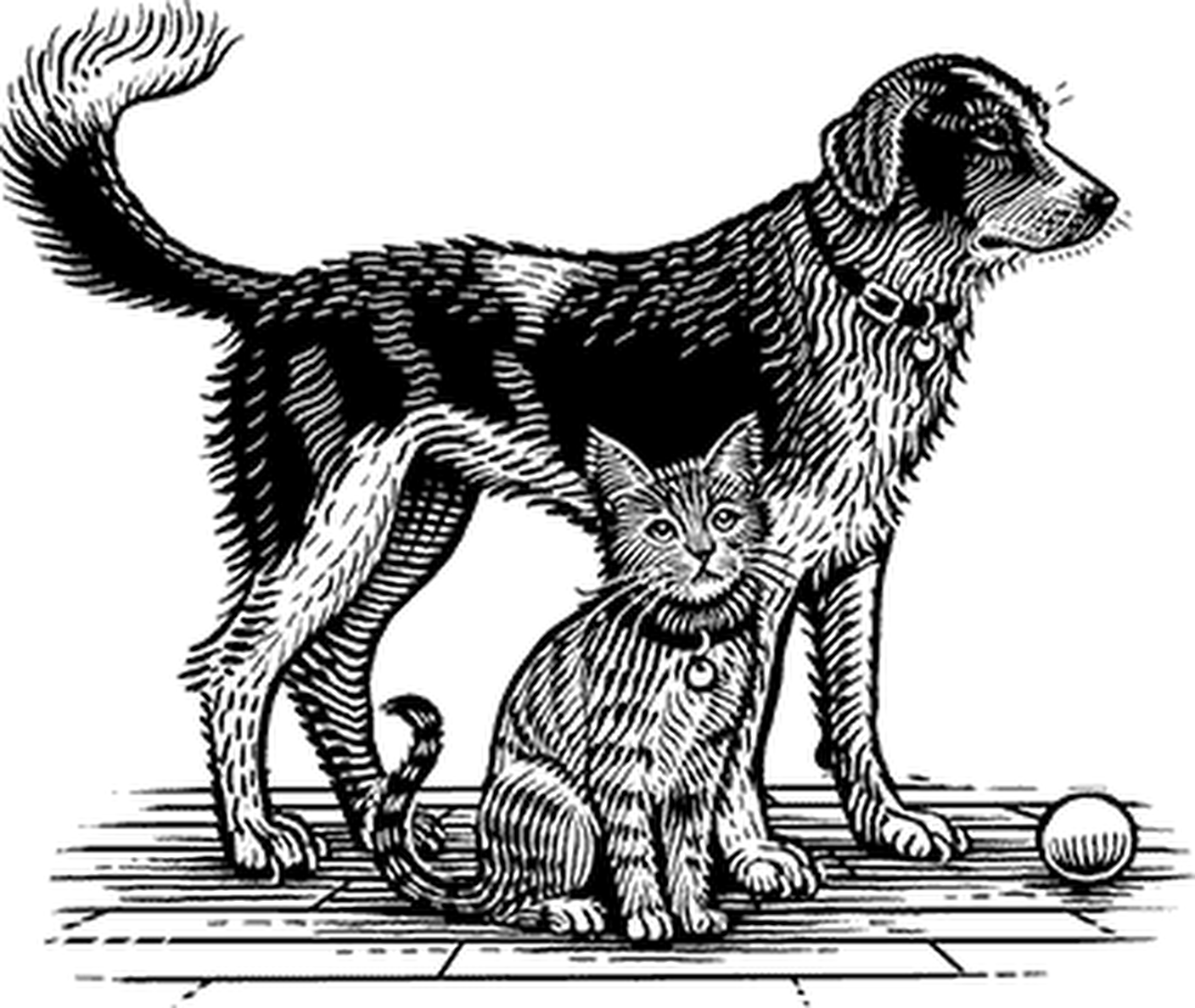
    Since 2002, the State University of New York College of Optometry (SUNY) has experimented on the brains of cats using taxpayer dollars. The ALDF filed a lawsuit in 2019 to compel the disclosure of public records regarding invasive experiments on cats and kittens conducted by the State University of New York College of Optometry.
    The Case:

    Challenging the Government’s Censorship of Animal Advocates’ Speech on Social Media

    In 2021, the ALDF filed a lawsuit on behalf of animal advocates who had been prevented from posting critical comments regarding animal experimentation on the Health and Human Services (HHS) otherwise public social media pages. HHS is primarily charged with funding and promoting research on animals.

    “92% of drugs tested on animals fail to meet the standards for human use, and this rate is growing, not improving.”

    — Food and Drug Administration
    Justice for All Creatures: The ALDF

    Captive Animals

    Millions of wild animals in the United States are forced into captivity — whether in circuses, zoos, aquariums, or even caged on private property. Little is being done legally to protect these animals, many of whom are kept in unjust conditions and confined to tiny cages. Many of these wild animals — especially tigers — are kept in private possession, meaning they are kept as pets. It is estimated that more tigers are held captive just in the state of Texas than exist worldwide in the wild. There is also a vast amount of trading of wild animals, some of which is done on the black market, and these animals are subjected to extreme suffering throughout the entire trading process.

    The Case:

    The Ben the Bear Case

    The ALDF was also involved in the Ben the Bear case, in which Ben the Bear was rescued from an abusive roadside zoo in North Carolina and relocated to a sanctuary through legal intervention. “We can walk and chew gum at the same time,” Green said when referring to the Ben the Bear case. “Ending those types of highly visible exploitation really does sort of help the broader consciousness that animals shouldn’t be being treated that way, period.” North Carolina has a law called Section 19A, under which, if animals need rescuing but the legal system is too busy or unresponsive, groups like the ALDF can still go directly to a judge and ask for a civil court order to intervene. Section 19A was used to rescue Ben.

    The Case:

    The Tiger King

    The ALDF was also involved in early investigations that led to the federal case against Joe Exotic from the Netflix documentary Tiger King. Green emphasizes that focusing on high-profile cruelty is a key factor in getting the public to care about the injustice related to animal exploitation.

    Justice for All Creatures: The ALDF

    Companion Animals

    Well over half of American households have a companion animal keeping them company. Companion animals mostly include cats and dogs but can extend to other pets such as horses or birds. The Animal Welfare Act (AWA) was put into place in 1966 to provide protections for companion animals, including those in zoos, laboratories, and those who are commercially bred. The AWA is frequently criticized for allowing puppy mills and their inhumane operations to go unchecked.

    The Case:

    Defending New York’s Cruelty Laws

    Gigi was a small dog who was struck with a metal rod during an altercation involving her family members and a family friend. At no point did Gigi touch or bite her attacker, and the injury caused her to lose an eye, along with a fractured cheekbone and injured shoulder. Her attacker was arrested and later charged with overdriving, torturing, or injuring an animal.

    The Case:

    Protecting Animal Victims

    Thirty-two animals — including 22 dogs, seven chickens, and three horses — were victims of severe neglect. They were found without any food or water and were in rough shape. They were taken to rehabilitation, where their health was restored. Several charges of second-degree felony animal neglect were filed.

    Farmed Animals

    The 9 billion land animals raised and killed for food each year in the United States experience extremely brutal suffering — and most of it is completely legal. Common practices include male chicks being ground up alive, animals having different body parts removed without anesthetics, and many of these animals being confined to such tight spaces that they can’t even turn around. About 60% of ALDF’s work focuses on farmed animals.

    The Case:

    Filing Against Foster Poultry Farms for Brutality Against Chickens

    The ALDF filed a lawsuit against Foster Poultry Farms when there was evidence that the farm was dipping chickens into electrified water that immobilized but didn’t numb them, causing extreme suffering during slaughter. The farm was also using 4 million gallons of water every single day at its Livingston, California, facility during a time of drought. The ALDF sued over this.

    The Case:

    Urging FSIS to Adequately Strengthen Substantiation of Animal-Raising Claims

    In 2023, the ALDF asked the USDA’s Food Safety and Inspection Service (FSIS) to better regulate the labels on meat products that use terms like “humane,” “cage free,” or “sustainably raised,” as they have little oversight and mislead consumers. The ALDF is pushing to require producers to back up their claims with real evidence.

    “We reached a favorable settlement that will change these practices,” Green said. “Not only is it a win for the environment, but it’s a win for animals as well.”

    Wildlife

    Wild animals have very few legal protections, especially when it comes to hunting. In 2019, well over 2 million wild animals were killed by Wildlife Services. Factory farming not only harms the billions of animals slaughtered for food, but the land polluted by these inhumane practices negatively impacts the homes of wildlife. Wild animals play a key role in maintaining our environment and ecosystems and are directly affected by the environmental impact humans have on the world.

    The Case:

    Urging FWS to Create a Robust Permitting and Enforcement Scheme to Protect Migratory Birds and Eagles Used in Exhibition

    In 2023, the ALDF submitted comments pushing the U.S. Fish and Wildlife Service (FWS) for stronger welfare standards and specific permits for exhibiting migratory birds and eagles. Captivity can seriously harm birds’ health and prevent natural behaviors, so the ALDF called for stricter rules that go beyond the USDA’s basic care standards — especially when it comes to exhibition.

    The Case:

    Challenging the Government’s Fatal Mismanagement of Protected Tule Elk

    The ALDF sued the National Park Service in 2021 for failing to protect tule elk at Point Reyes National Seashore in California. A fence was keeping the elk from accessing food and water beyond their enclosure while giving priority to cattle grazing leases. As a result, more than 150 elk died. As a result of the lawsuit, the Park Service dismantled 800 feet of the fence last December, allowing the elk to roam free and access sufficient food and water to survive.

    Continuing the Mission

    As of recently, Chris and his team have been doing a lot of work regarding the puppy mill industry. The horrific conditions under which puppy mills operate have begun to gain notice in the broader public sphere, and some states and cities are beginning to pass laws stating that cats or dogs cannot be sold if sourced from private breeders or puppy mills — only from rescues or shelters. However, there is still a lot of work to be done.

    “The puppy mill industry is trying to get creative, and they’re kind of laundering these puppy mill animals through these sort of scam rescues,” Green said.

    One example of litigation the ALDF has been working on regarding these staged rescues is a lawsuit involving puppy mill broker JAKS, who has been caught violating these laws multiple times before.

    The ALDF is celebrating its 46th anniversary this year. To support the ALDF, learn more, or further explore its mission, visit www.aldf.org.

    Discover Next

    Insights from PI Experts

    Learn from experts in personal injury about key cases, the business of law, and more insights that shape the future of trial law.

    Authors