The Trial Lawyer's Journal

TLJ Small Logo
Close
Group 39053677
Share Your Story with Trial Lawyer’s Journal
Trial Lawyer’s Journal is built on the voices of trial lawyers like you. Share your journey, insights, and experiences through articles, interviews, and our podcast, Celebrating Justice.
Stay Updated
Sign up for our newsletter to get the latest from TLJ.


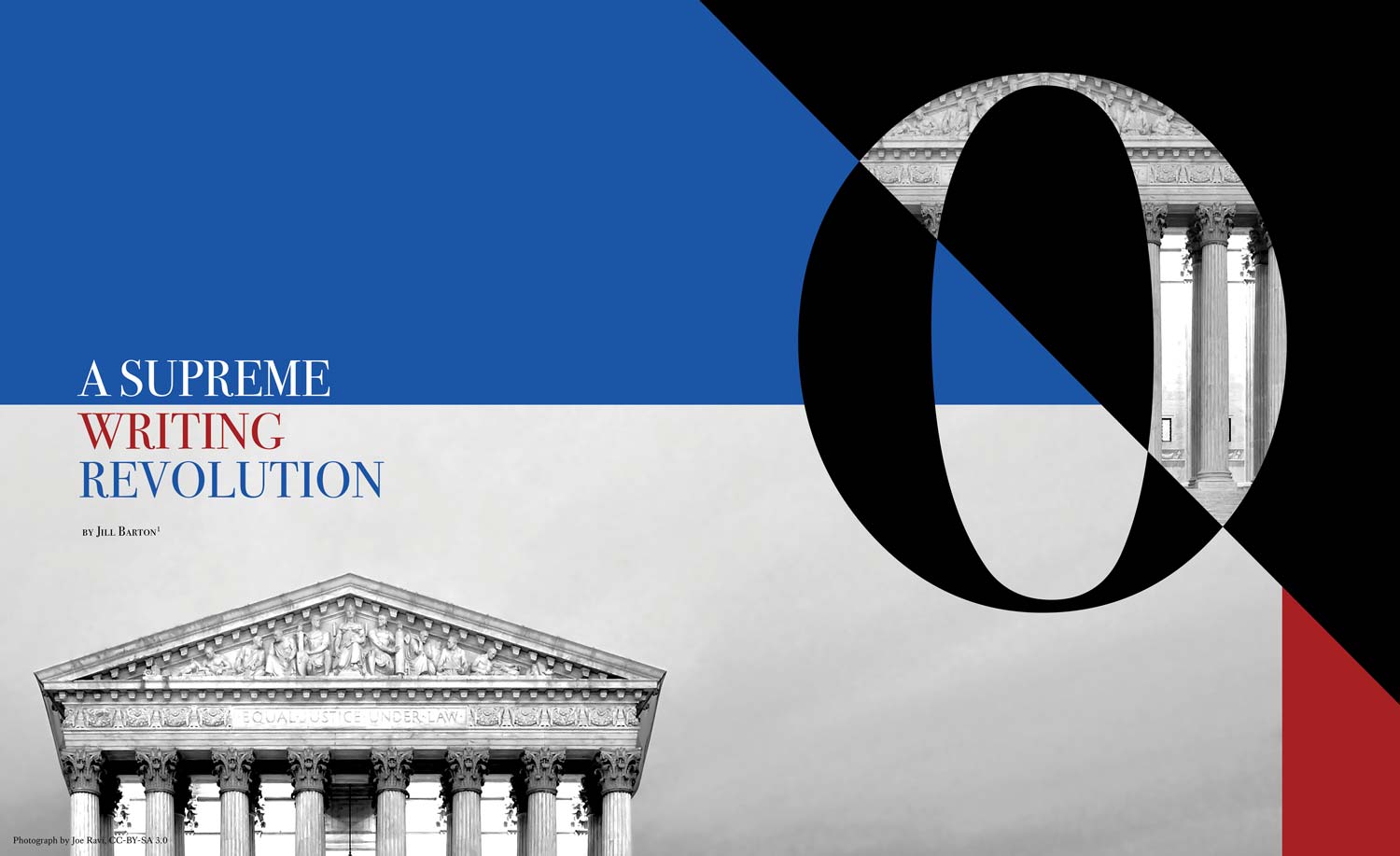
    A Supreme Writing Revolution

    A Supreme Guide To Writing - TLJ

    Over the last decade, as the youngest generation skips punctuation and chooses emojis over words, Supreme Court justices have also embraced a more casual writing style. They’re not cutting out apostrophes, using abbreviations willy-nilly, or dropping smiley-faces in opinions—yet. But the justices are relaxing their grammar, shortening words and sentences, and striving to make their writing more accessible.

    To help writers modernize their style, even as writing style evolves, I spent five years studying every U.S. Supreme Court opinion starting in 2018, spanning more than 10,000 pages. I analyzed how the justices treat the most important and interesting points of grammar and writing style. And I uncovered a fascinating reality: writing evolves so rapidly that even the Supreme Court justices sometimes disagree on when to ignore writing tradition and where to hold true to traditional rules.

    Many have vaulted toward informality and use contractions, despite Justice Antonin Scalia’s complaint that they are “intellectually abominable.”2

    Some justices write Congress’ to show the possessive; others write Congress’s. Some use because interchangeably with since; some wouldn’t dare.

    I compiled the findings in my book, The Supreme Guide to Writing (Oxford University Press 2024), where I settled debates on more than 30 points of legal grammar and style by following the Court’s own example: adopting the majority rule. For instance, when at least five of the nine justices use contractions (as they do now), that majority rule prevails. My goal is to give lawyers clear, practical guidelines, so they can avoid costly mistakes—like a $5 million comma debacle in Maine. In that case, lawmakers followed the instruction in the legislative drafting manual to avoid the serial comma—a decision that made a law about overtime so confusing that it led to years of litigation.3

    The following two chapters are excerpts from The Supreme Guide to Writing. They show how to make your writing clearer and concise—by following the lead of the nine esteemed justices sitting on the U.S. Supreme Court.

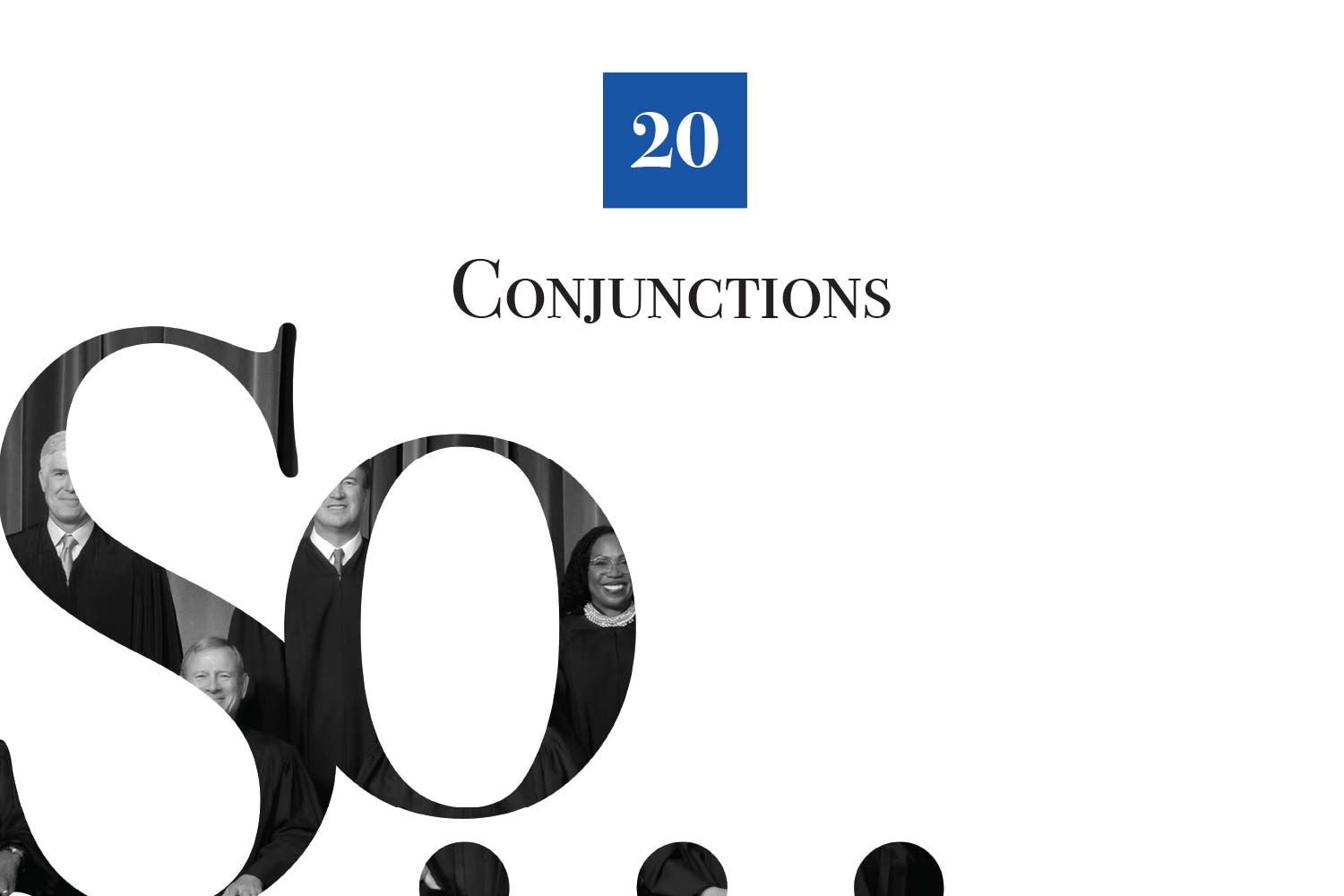
    Conjunctions

    “In particular, the majority zeros in on the disjunctive conjunction ‘or,’ and proceeds to build its entire opinion around that linguistic feature.” 1

    —Justice Neil Gorsuch

    Membership Required

    You must be a member to access this content.

    View Membership Levels

    Already a member? Log in here

    Discover Next

    Insights from Experts

    Learn from industry experts about key cases, the business of law, and more insights that shape the future of trial law.

    Author