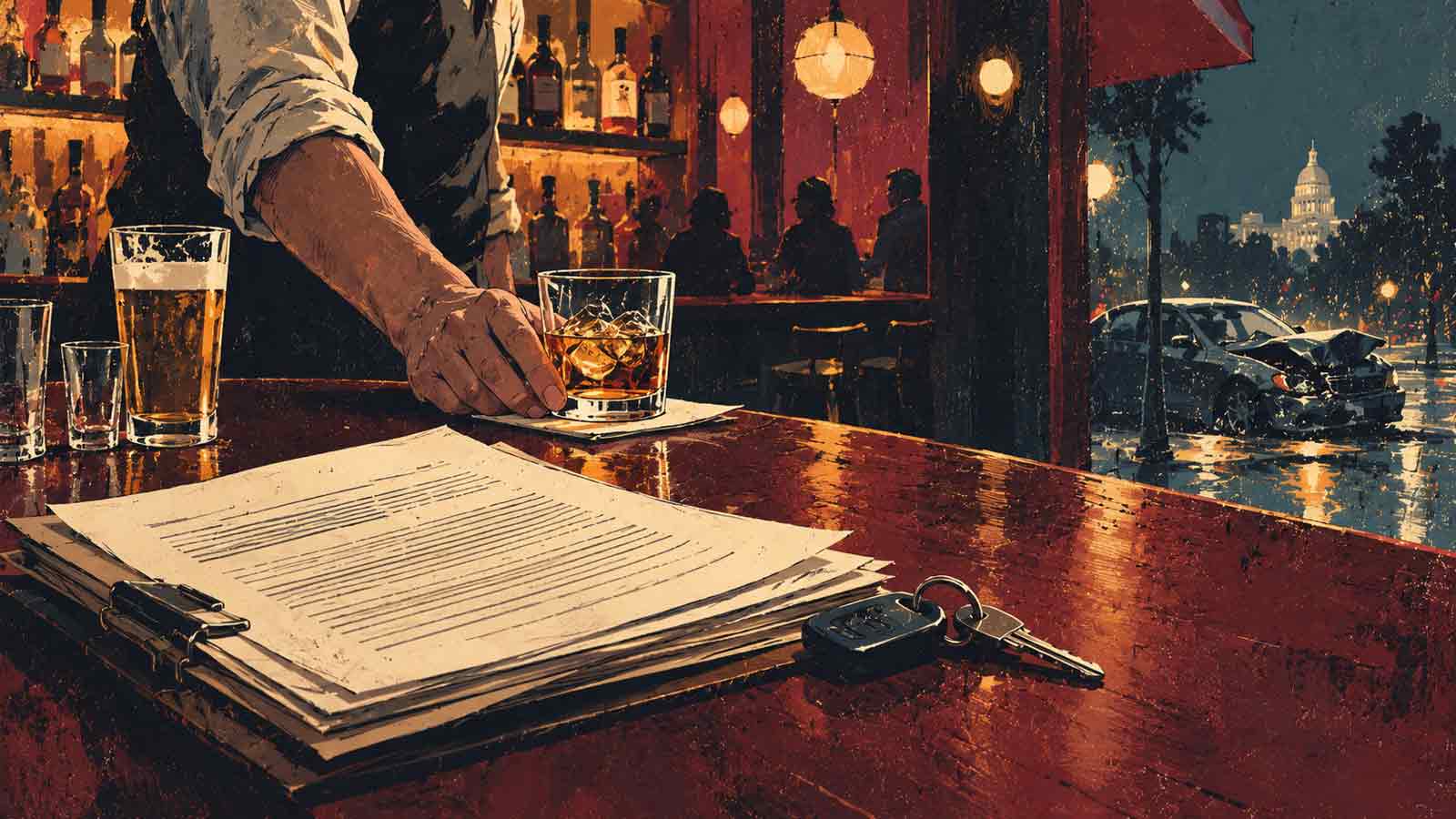
Dram shop liability refers to laws that hold bars, restaurants, liquor stores and other alcohol vendors legally responsible when they serve alcohol to someone who later causes injury due to intoxication. In personal injury cases, these laws allow victims to pursue compensation not only from the intoxicated person, but also from the business that negligently provided the alcohol.
Dram shop laws vary by state, but they are designed to promote responsible alcohol service and protect the public. If you’ve been injured by a drunk driver or intoxicated individual, dram shop liability may expand your legal options. Below, we’ll explain how dram shop liability works, when it applies, what must be proven and what compensation may be available.
How Does Dram Shop Liability Work?
Dram shop liability allows an injured person to bring a claim against an alcohol-serving establishment when that business contributes to the intoxication that caused harm.
The term “dram shop” comes from old taverns that sold alcohol by the dram, a small unit of measurement.
Under dram shop laws, a business may be liable if it:
Served alcohol to someone who was visibly intoxicated
Served alcohol to a minor
Continued serving alcohol despite clear signs of impairment
Violated state alcohol service regulations
For example:
A bar continues serving drinks to a visibly intoxicated patron.
The patron leaves, drives and causes a serious car accident.
The injured victim may pursue a claim against both the driver and the bar.
Dram shop liability does not automatically apply in every alcohol-related accident. The injured party must prove the establishment acted negligently under state law.
What Must Be Proven in a Dram Shop Case?
The elements of a dram shop claim vary by jurisdiction, but generally require proof of the following:
The establishment served alcohol to the at-fault person
The person was visibly intoxicated or underage at the time
The intoxication caused the accident or injury
The plaintiff suffered damages
Evidence in these cases may include:
Proving visible intoxication is often the most challenging element.
Signs of visible intoxication may include:
The more clearly these signs can be demonstrated, the stronger the claim.
When Does Dram Shop Liability Commonly Arise?
Dram shop liability most often arises in cases involving drunk driving accidents.
However, it may also apply in situations involving:
Assaults by intoxicated patrons
Bar fights
Alcohol-related falls or injuries
Accidents caused by intoxicated minors
Common defendants in dram shop claims include:
Bars and nightclubs
Restaurants
Liquor stores
Event venues
Caterers
Some states also impose “social host liability,” which can hold private individuals responsible for serving alcohol to minors or visibly intoxicated guests.
Because dram shop laws vary widely, eligibility depends on state-specific statutes.
What Compensation Is Available in a Dram Shop Claim?
Victims injured due to alcohol-related negligence may recover various types of damages.
These may include:
Economic Damages
Non-Economic Damages
In some cases, punitive damages may be awarded if the establishment’s conduct was particularly reckless.
Because businesses often carry substantial liability insurance policies, dram shop claims may provide access to additional compensation beyond the intoxicated individual’s personal insurance.
This can be especially important in catastrophic injury cases.
Why Are Dram Shop Laws Important?
Dram shop laws promote public safety by encouraging responsible alcohol service.
They:
Deter over-serving
Encourage proper employee training
Reduce drunk driving incidents
Provide compensation options for victims
Without dram shop laws, injured victims might be limited to recovering from an intoxicated individual who may have minimal insurance or financial resources.
By extending liability to alcohol vendors, these laws help ensure greater accountability.
However, defendants often vigorously contest dram shop claims.
Strong evidence and experienced legal representation are often necessary.
Conclusion
Dram shop liability is a legal doctrine that allows injured victims to hold alcohol-serving establishments accountable when negligent alcohol service leads to harm. These laws commonly apply in drunk driving accidents and other alcohol-related incidents.
To succeed in a dram shop claim, the plaintiff must prove that the business served alcohol to someone who was visibly intoxicated or underage and that this service contributed to the injury.
If you or a loved one has been injured in an alcohol-related accident, consulting with an experienced personal injury attorney can help determine whether a dram shop claim may provide additional avenues for compensation.