


Suite 216
Bowie, Maryland 20716


Gabriel Christian’s “Closing Argument”


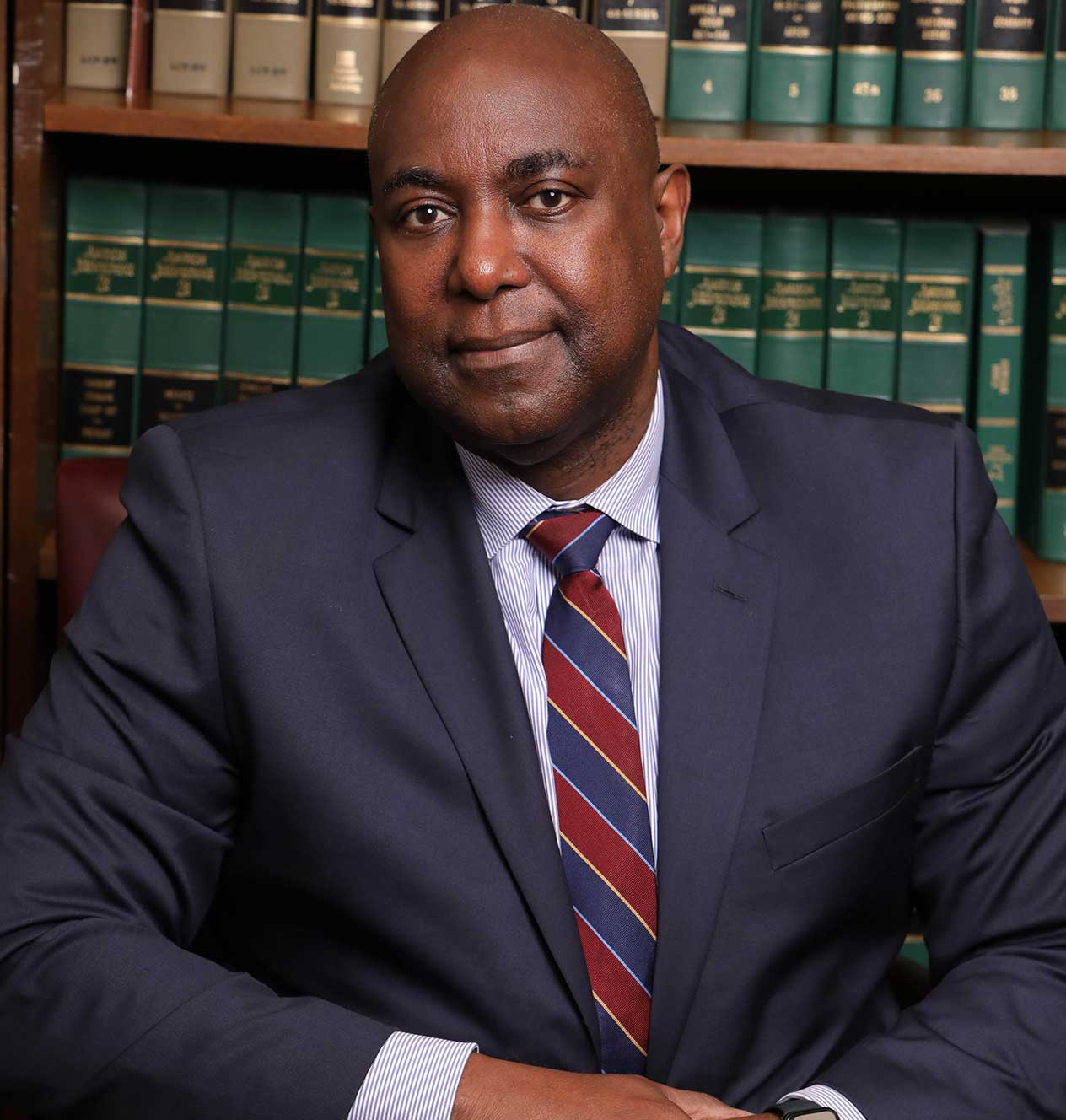
Frequently Asked Questions about Gabriel Christian
Why did Gabriel Christian want to become a trial lawyer?
“I never wanted to become a trial lawyer,” Christian says. Born in Dominica to a British Army veteran of World War II, he joined the cadet corps at 11 and considered law in high school, when people told the student federation president he spoke well. At the University of the District of Columbia, Dr. Albert Carter helped him get into Georgetown, and Admiral William Ryan talked him out of an MBA — “a lot of sizzle and no steak.” He entered Georgetown University Law Center on Aug. 27, 1987.
What makes Gabriel Christian different from other personal injury and criminal defense lawyers?
Christian describes his firm as “community-developed.” He is the immediate past president of the Tuskegee Airmen, a nonprofit that trains young people as pilots from age 15 and preserves the history of the Black fighter pilots of World War II — a unit, he notes, that owes its 1941 creation to an NAACP lawsuit by Howard student Yancey Williams. He has written histories of West Indians in the Royal Air Force, and he credits mastery of the facts and direct connection with jurors as the keys to trial work.
What is a case that mattered to Gabriel Christian?
A recent criminal case: a tow truck company owner with a concealed carry permit was charged with first-degree assault after a confrontation outside a Panera Bread, and prosecutors wanted a mandatory five years. Christian took six staff members to the restaurant on a morning with matching conditions, and body-camera footage showed no employee or patron had seen an altercation. Set for trial, he instead accepted an arrangement that ended in dismissal, because “you cannot interpose your feelings over that which is in the client’s best interest.” The client took the whole staff to dinner.
What is Gabriel Christian’s “Closing Argument”?
“Civility, grace, but most of all integrity should drive our practice of law,” he says. Civility he traces to his parents — a soldier, police officer and firefighter father and a nurse mother who directed a school for the blind. Grace he learned as a law clerk when partner John Smallwood made him withdraw sanctions against an opposing lawyer who missed a deadline by a day. Integrity he showed by telling a judge that a pro se litigant’s missing pleading really had been filed. “It’s not just about winning. It’s about how you win.”
What types of cases does the Law Offices of Gabriel J. Christian & Associates handle?
The firm, located in Bowie, Maryland, handles plaintiffs’ personal injury cases, including medical malpractice and auto torts, along with criminal defense, business and commercial law, family law, environmental and sustainable energy law and international law. Christian began at the insurance defense firm Farrington and Smallwood, representing carriers such as USAA and Allstate, and handed off his last insurance defense cases in the late 1990s, once he had enough plaintiffs’ work. He tried his first murder case in 1995, defending a 14-year-old girl. The firm’s website is marylandattorneyatlaw.com.
Where did Gabriel Christian go to law school, and where is he admitted to practice?
Christian earned a Bachelor of Business Administration from the University of the District of Columbia in 1986 and his J.D. from Georgetown University Law Center in 1991, the year he was admitted to the Maryland Bar. He was admitted to the U.S. District Court for the District of Maryland in 1992 and to the U.S. Supreme Court in 1997. In 2007 he was appointed to the Maryland Courts of Appeals Nomination Commission, and in 2012 to the Governor’s Commission on Caribbean Affairs. He co-authored “In Search of Eden” (1992) and “For King & Country” (2009).