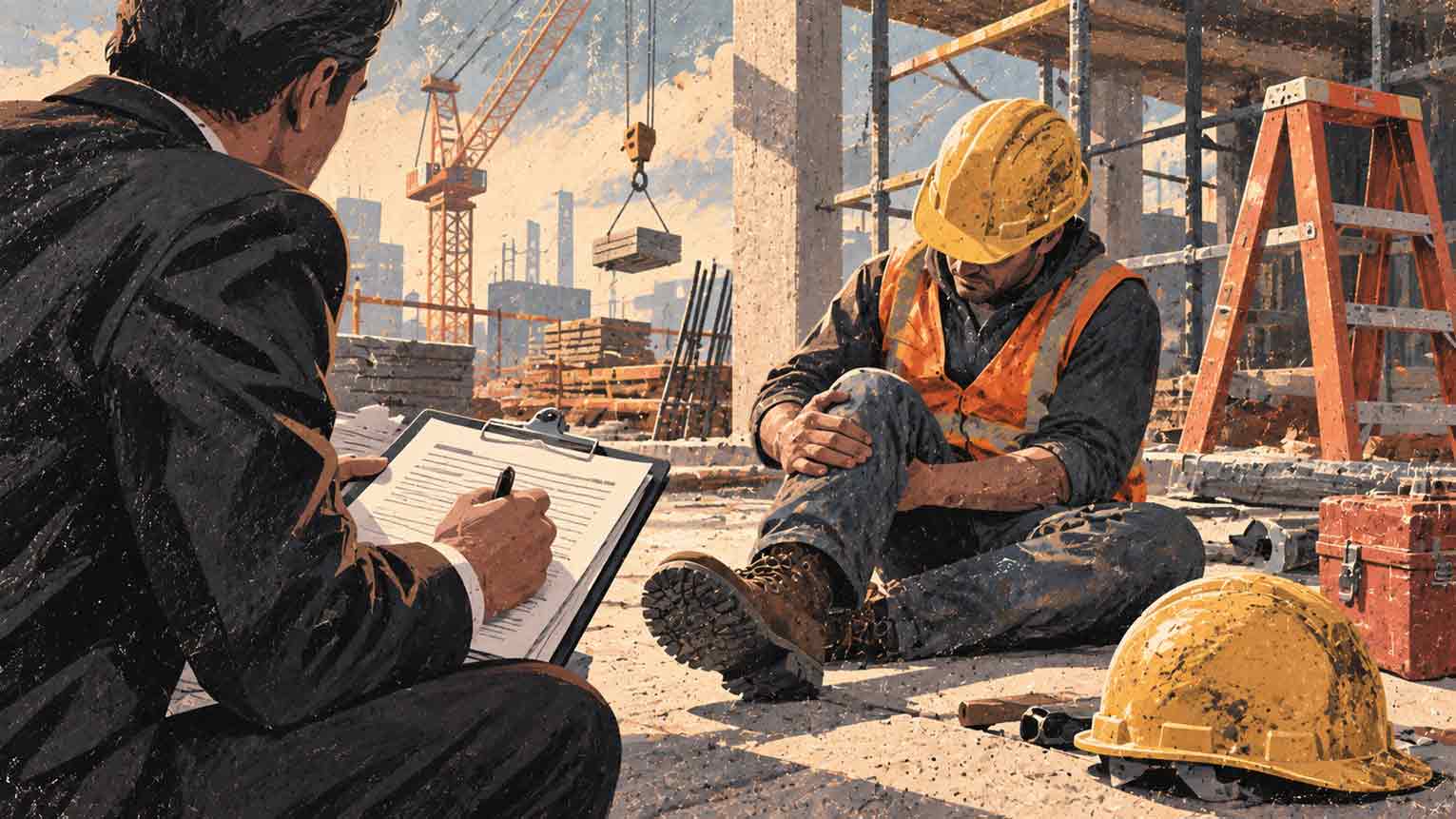
A construction accident claim is a legal demand for compensation filed by a worker or bystander who was injured due to unsafe conditions, negligence or defective equipment on a construction site. Construction sites are among the most dangerous workplaces, and serious injuries are unfortunately common. When safety rules are ignored or hazards are not properly addressed, injured individuals may have the right to seek financial recovery.
Construction accident claims can involve workers’ compensation, third-party lawsuits or both. In this guide, we’ll explain what qualifies as a construction accident claim, who may be liable, what compensation may be available and how these cases work.
What Qualifies as a Construction Accident Claim?
A construction accident claim arises when someone is injured at or near a construction site because of negligence or unsafe practices. These claims may involve employees, subcontractors, pedestrians or visitors.
Common construction accidents include:
To qualify as a negligence-based construction accident claim, the injured party generally must prove:
For injured workers, the first avenue of recovery is often workers’ compensation. However, in many cases, additional claims may be filed against third parties responsible for the unsafe condition.
Construction sites involve multiple contractors and layers of responsibility, which can complicate liability.
Who Can Be Held Liable in a Construction Accident?
Construction projects often involve general contractors, subcontractors, property owners and equipment manufacturers. Liability depends on who had control over the hazardous condition.
Potentially responsible parties may include:
General contractors
Subcontractors
Property owners
Equipment manufacturers
Architects or engineers
Third-party vendors
For example:
If scaffolding collapses due to improper assembly, the subcontractor may be liable.
If a defective power tool causes injury, the manufacturer could face product liability claims.
If a property owner failed to address known hazards, they may share responsibility.
Key factors in determining liability include:
Multiple parties may share fault under comparative negligence laws.
Because construction sites are heavily regulated, safety violations often play a central role in these claims.
How Does Workers’ Compensation Affect a Construction Accident Claim?
Most injured construction workers are covered by workers’ compensation insurance. Workers’ compensation provides benefits regardless of fault.
Workers’ compensation typically covers:
However, workers’ compensation does not provide compensation for pain and suffering.
In some cases, injured workers may file a third-party lawsuit in addition to receiving workers’ compensation benefits.
Third-party claims may arise when:
A subcontractor’s negligence caused the accident
A defective product was involved
A non-employer party created unsafe conditions
Filing both types of claims can increase total recovery, but coordination between them is necessary.
Understanding the difference between workers’ compensation and personal injury lawsuits is critical in construction cases.
What Compensation Is Available in a Construction Accident Claim?
The type of compensation depends on whether the claim is limited to workers’ compensation or includes a third-party lawsuit.
Workers’ Compensation Benefits
Third-Party Personal Injury Damages
Severe construction injuries often include:
Traumatic brain injuries
Spinal cord injuries
Broken bones
Burns
Amputations
Because construction injuries can be catastrophic, damages in third-party lawsuits may be substantial.
Insurance policy limits and the number of liable parties can significantly affect total compensation.
What Is the Process for Filing a Construction Accident Claim?
The process depends on the type of claim involved.
For workers’ compensation:
Report the injury to your employer promptly.
Seek medical treatment.
File a workers’ compensation claim.
Attend required medical evaluations.
For third-party personal injury claims:
Investigate the accident thoroughly.
Identify responsible parties.
Gather evidence and documentation.
File an insurance claim or lawsuit.
Negotiate settlement or proceed to trial.
Evidence may include:
Strict deadlines apply. Workers’ compensation claims and personal injury lawsuits each have separate filing requirements.
Acting quickly helps preserve evidence and protect your legal rights.
Conclusion
A construction accident claim is a legal action seeking compensation for injuries sustained on or around a construction site. Depending on the circumstances, injured workers may pursue workers’ compensation benefits, third-party lawsuits or both.
Construction sites involve multiple parties and complex safety regulations, making liability investigations critical. Compensation may cover medical costs, lost wages, disability benefits and in some cases, pain and suffering.
If you’ve been injured in a construction accident, consulting with an experienced personal injury attorney can help you understand your options and pursue the maximum recovery available under the law.