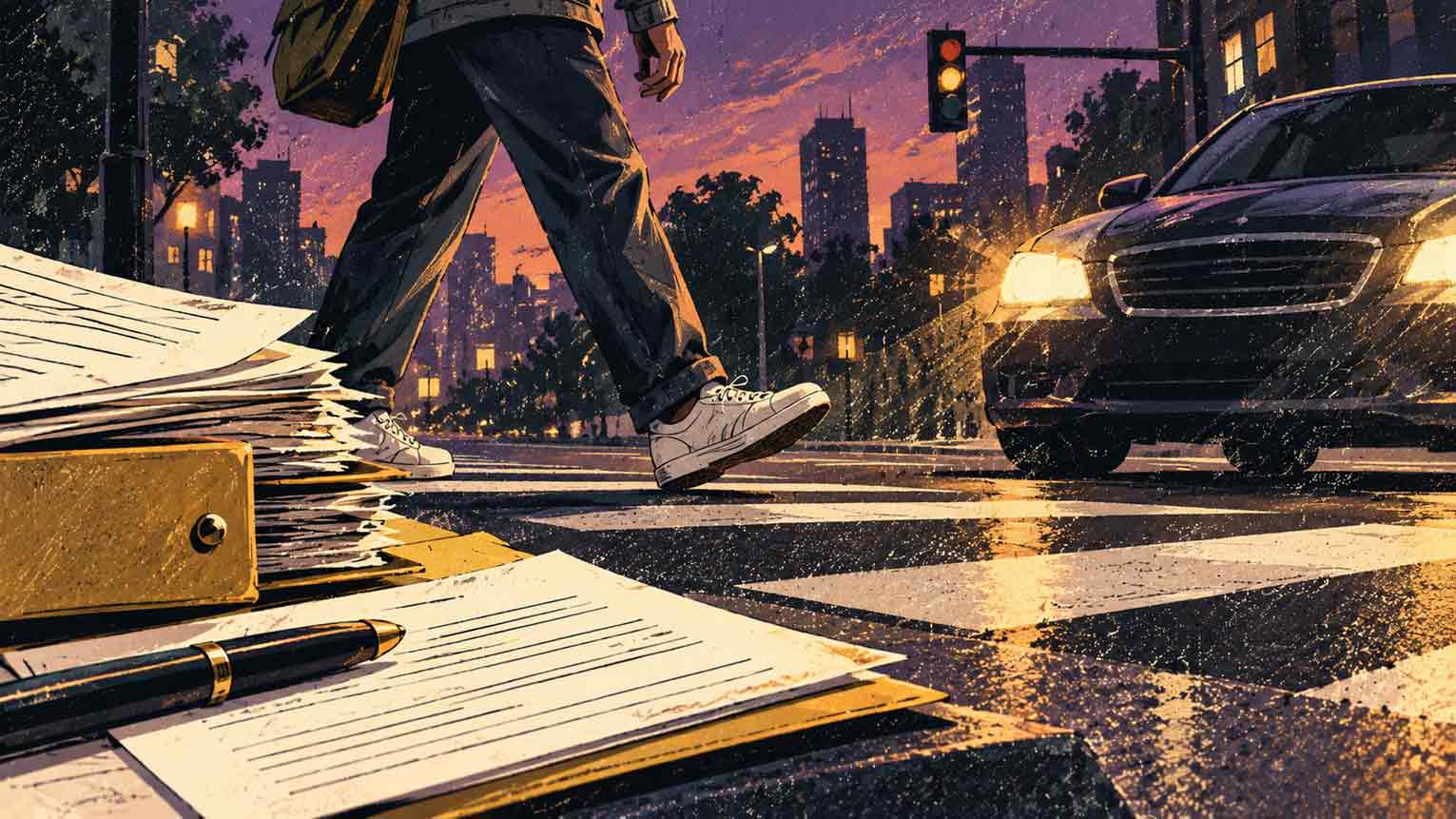
A pedestrian accident claim is a legal demand for compensation filed by someone who was injured while walking due to a driver’s negligence or other unsafe conditions. Because pedestrians have no physical protection in a collision, these accidents often result in serious or life-threatening injuries. When a crash is caused by careless driving or another party’s misconduct, the injured pedestrian may have the right to pursue financial recovery.
Pedestrian accident claims fall under personal injury law and typically involve insurance companies, police investigations and detailed evidence review. In this guide, we’ll explain what qualifies as a pedestrian accident claim, who may be liable, what compensation may be available and how the process works.
What Qualifies as a Pedestrian Accident Claim?
A pedestrian accident claim arises when a person on foot is struck or injured due to someone else’s negligence. Most commonly, these accidents involve motor vehicles, but other scenarios may also qualify.
Common causes of pedestrian accident claims include:
Drivers failing to yield at crosswalks
Distracted driving (such as texting)
Speeding in residential or school zones
Running red lights or stop signs
Drunk or impaired driving
Poorly designed intersections
To succeed in a pedestrian accident claim, the injured person generally must prove:
The driver or other party owed a duty of care
That duty was breached
The breach caused the accident
The accident resulted in damages
Drivers have a legal obligation to operate their vehicles safely and remain alert for pedestrians. When they fail to do so, they may be held liable for resulting injuries.
Even if a pedestrian was not in a marked crosswalk, they may still have a valid claim depending on the circumstances.
Who Can Be Held Liable in a Pedestrian Accident?
While the at-fault driver is often the primary liable party, others may share responsibility depending on how the accident occurred.
Potentially liable parties include:
The driver of the vehicle
The owner of the vehicle
An employer (if the driver was on the job)
A government entity responsible for road design
A construction company creating unsafe walking conditions
For example:
If a delivery driver hits a pedestrian while working, the employer may be liable under vicarious liability laws.
If a malfunctioning traffic signal contributed to the crash, a city or municipality could share responsibility.
If construction debris forced a pedestrian into traffic, a contractor might be liable.
Determining liability requires careful review of:
In some states, comparative negligence rules may reduce compensation if the pedestrian is found partially at fault.
What Compensation Is Available in a Pedestrian Accident Claim?
Pedestrian accidents frequently result in severe injuries due to the force of impact.
Common injuries include:
Compensation in a pedestrian accident claim may include:
Economic Damages
Non-Economic Damages
In cases involving especially reckless conduct — such as drunk driving — punitive damages may also be available in certain jurisdictions.
The value of a claim depends on injury severity, available insurance coverage and the strength of liability evidence.
How Does Insurance Work in a Pedestrian Accident Claim?
Most pedestrian accident claims begin with a claim against the at-fault driver’s auto insurance policy.
Auto liability coverage typically pays for:
Medical expenses
Lost income
Pain and suffering
If the driver lacks sufficient insurance, additional sources of recovery may include:
The pedestrian’s own uninsured or underinsured motorist coverage
Employer insurance policies
Government liability coverage (in roadway cases)
Insurance companies may attempt to:
Dispute liability
Argue the pedestrian was inattentive
Downplay the severity of injuries
Offer low settlement amounts
Because insurers focus on minimizing payouts, strong documentation and legal representation can significantly impact the outcome.
What Is the Process for Filing a Pedestrian Accident Claim?
The process typically begins immediately after the accident.
Important early steps include:
Seeking medical attention
Reporting the accident to law enforcement
Gathering evidence from the scene
Identifying witnesses
Notifying insurance companies
After medical treatment stabilizes, a demand package outlining liability and damages may be submitted to the at-fault party’s insurer.
If negotiations fail to produce a fair settlement, filing a personal injury lawsuit may become necessary.
Strict statutes of limitations apply, and deadlines vary by state.
Because pedestrian accident injuries are often severe and long-lasting, it is important not to settle a claim prematurely before the full extent of damages is understood.
Conclusion
A pedestrian accident claim is a legal action seeking compensation for injuries suffered while walking due to another party’s negligence. Drivers have a duty to remain vigilant and yield to pedestrians, and failing to do so can result in serious legal consequences.
Compensation may cover medical expenses, lost wages, pain and suffering and long-term disability. However, insurance disputes and liability challenges are common.
If you or a loved one has been injured in a pedestrian accident, consulting with an experienced personal injury attorney can help you evaluate your claim, preserve critical evidence and pursue the compensation you deserve.