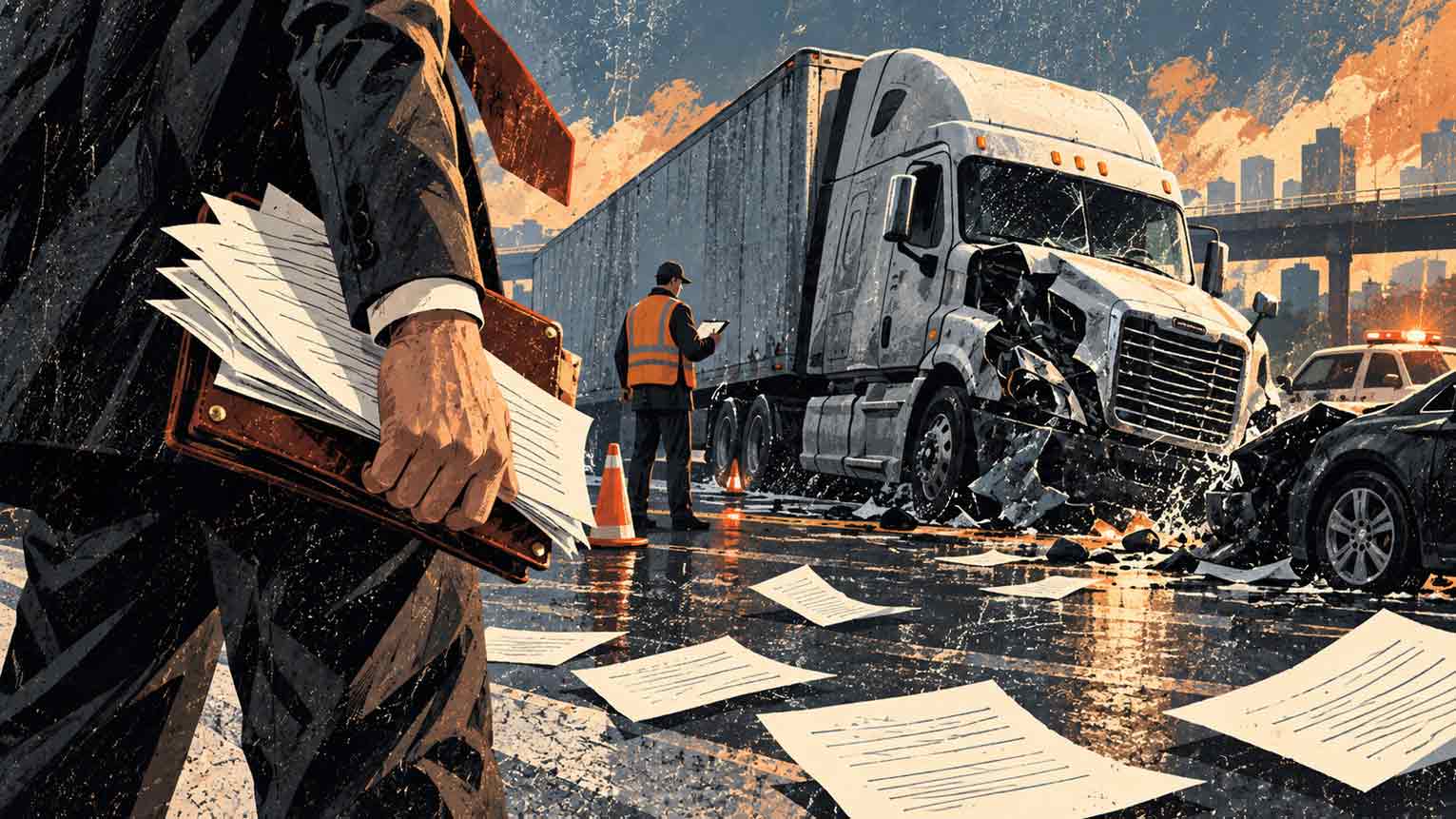
A truck accident claim is a legal demand for compensation filed by someone injured in a collision involving a commercial truck. Because large trucks — such as semi-trucks, tractor-trailers, and delivery vehicles — are significantly heavier and larger than passenger cars, these crashes often result in catastrophic injuries. When a truck accident is caused by negligence, the injured party may pursue financial recovery through insurance claims or a lawsuit.
Truck accident claims are often more complex than standard car accident cases. They may involve federal safety regulations, multiple liable parties, and extensive evidence review. In this guide, we’ll explain how truck accident claims work, who may be responsible, what compensation may be available, and what makes these cases unique.
What Causes a Truck Accident Claim?
A truck accident claim arises when a collision involving a commercial vehicle results in injury or death due to negligence. Truck drivers and trucking companies have a duty to operate safely and comply with strict safety regulations.
Common causes of truck accidents include:
Federal regulations limit how many hours a truck driver may operate a vehicle without rest. Violations of these rules can support a negligence claim.
To succeed in a truck accident claim, the injured party generally must prove:
The driver or company owed a duty of care
That duty was breached
The breach caused the crash
The crash resulted in damages
Because trucks are commercial vehicles, additional safety standards often apply.
Who Can Be Held Liable in a Truck Accident?
Unlike a typical car accident, truck accident claims may involve multiple potentially responsible parties.
Liable parties may include:
For example:
If a driver violated hours-of-service rules, the driver and employer may be liable.
If improperly secured cargo caused the crash, the loading company may share responsibility.
If defective brakes contributed to the accident, a manufacturer could be liable.
Trucking companies are often responsible under vicarious liability laws when their drivers cause harm while working.
Determining liability often requires reviewing:
Because multiple parties may share fault, truck accident investigations are typically detailed and complex.
What Injuries Are Common in Truck Accidents?
Due to the size and weight of commercial trucks, injuries are often severe.
Common injuries include:
Traumatic brain injuries
Spinal cord injuries
Broken bones
Internal organ damage
Severe burns
Amputations
In fatal accidents, surviving family members may pursue a wrongful death claim.
Because injuries are often catastrophic, victims may require:
Emergency surgery
Long-term rehabilitation
Assistive devices
Ongoing medical care
The severity of injuries significantly affects the value of a truck accident claim.
What Compensation Is Available in a Truck Accident Claim?
Compensation in a truck accident claim is intended to cover both financial and personal losses.
Economic Damages
Medical expenses
Future medical treatment
Lost wages
Reduced earning capacity
Property damage
Non-Economic Damages
In cases involving egregious conduct — such as knowingly violating safety regulations — punitive damages may also be available.
The amount of compensation depends on:
Commercial trucking companies typically carry higher insurance limits than individual drivers, which can impact recovery.
How Is a Truck Accident Claim Different From a Car Accident Claim?
Truck accident claims are often more complicated than standard auto accident cases.
Key differences include:
Federal safety regulations apply
Larger insurance policies are involved
Multiple defendants may be named
Extensive electronic data may exist
Corporate legal teams are often involved
Trucking companies and their insurers often act quickly to investigate accidents and protect their interests. They may send representatives to the scene shortly after the crash.
Because evidence such as black box data can be lost or overwritten, early legal action is important.
Truck accident claims also frequently require expert testimony regarding accident reconstruction, industry standards, and regulatory compliance.
Conclusion
A truck accident claim is a legal action seeking compensation for injuries caused by a commercial truck collision. These cases often involve serious injuries, multiple liable parties, and complex federal safety regulations.
Victims may recover compensation for medical expenses, lost wages, pain and suffering, and long-term disability. However, trucking companies and insurers often vigorously defend these claims.
If you or a loved one has been injured in a truck accident, consulting with an experienced personal injury attorney can help protect critical evidence, identify responsible parties, and pursue the full compensation available under the law.