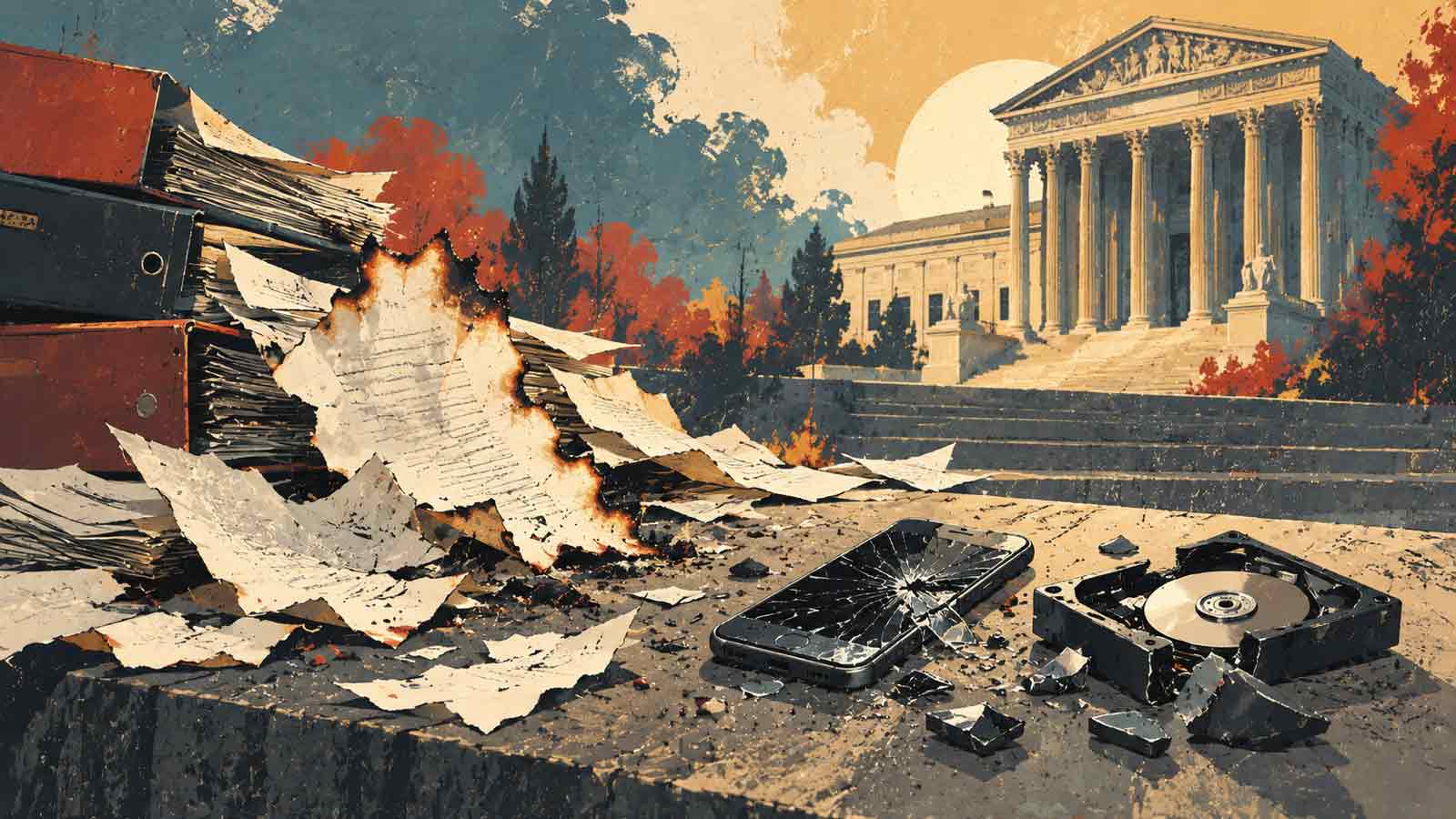
Spoliation of evidence refers to the destruction, alteration or failure to preserve evidence that is relevant to a legal case. In personal injury law, spoliation can seriously impact the outcome of a claim because critical proof may be lost before it can be examined. Courts take spoliation seriously, and parties who improperly destroy evidence may face penalties.
If you are involved in a personal injury dispute, understanding spoliation of evidence is essential. Evidence can make or break a case. Below, we’ll explain what spoliation means, when it occurs, how courts handle it and what steps you can take to protect your claim.
What Does Spoliation of Evidence Mean?
Spoliation of evidence occurs when someone destroys, alters, hides or fails to preserve information that is relevant to a lawsuit. The evidence may be physical, digital or documentary in nature.
Examples of evidence that may be subject to spoliation include:
Surveillance footage
Vehicle black box data
Maintenance records
Photographs
Emails or text messages
Medical records
Defective products
Spoliation can happen intentionally or negligently.
For example:
A company deletes security footage after receiving notice of a claim.
A trucking company overwrites electronic logging data following an accident.
A defendant repairs or disposes of defective equipment before inspection.
Once a party reasonably anticipates litigation, they generally have a duty to preserve relevant evidence.
Failing to do so may result in legal consequences.
When Does the Duty to Preserve Evidence Begin?
The duty to preserve evidence typically begins when a party knows — or should know — that litigation is likely.
This can occur when:
An accident causes serious injury
A claim letter is sent
An insurance claim is filed
A lawsuit is formally filed
An attorney sends a preservation letter
A preservation letter (sometimes called a spoliation letter) notifies the opposing party that certain evidence must be retained.
Once the duty attaches:
Evidence must not be destroyed
Routine deletion policies may need to be suspended
Digital records must be safeguarded
Failure to preserve evidence after notice can result in court sanctions.
The earlier preservation efforts begin, the better.
What Happens If Evidence Is Destroyed?
If a court determines that spoliation occurred, it may impose penalties on the responsible party.
Possible consequences include:
Monetary sanctions
Fines
Exclusion of certain defenses
Jury instructions allowing negative inferences
Dismissal of claims or defenses
One common remedy is an “adverse inference” instruction. This allows the jury to assume that the destroyed evidence would have been unfavorable to the party responsible for its loss.
For example:
The severity of sanctions depends on:
Whether the destruction was intentional
Whether it was negligent
How important the evidence was
Whether the loss prejudiced the opposing party
Courts aim to preserve fairness in the litigation process.
Why Is Spoliation Important in Personal Injury Cases?
Personal injury cases often rely heavily on evidence to prove liability and damages.
Critical evidence may include:
If this evidence is destroyed or altered, it can weaken or even derail a claim.
Insurance companies and corporate defendants sometimes control important evidence, such as:
Surveillance recordings
Maintenance logs
Employee records
Prompt legal action can help ensure preservation.
An experienced personal injury attorney may send a spoliation letter immediately after being retained.
Acting quickly protects your rights and strengthens your case.
What Should You Do to Prevent Spoliation?
If you are injured in an accident, you can take proactive steps to preserve evidence.
Important actions include:
Photographing the scene
Preserving damaged property
Keeping copies of medical records
Saving text messages or emails
Avoiding alterations to physical evidence
Contacting an attorney promptly
Do not repair, discard or modify important evidence without consulting legal counsel.
If you believe the opposing party may destroy evidence, your attorney can seek court intervention.
Preserving evidence is often one of the most important steps in building a strong personal injury case.
Conclusion
Spoliation of evidence refers to the destruction, alteration or failure to preserve evidence relevant to a legal claim. In personal injury cases, lost evidence can significantly affect liability and compensation.
Courts impose serious penalties when parties fail to preserve important information after litigation is anticipated. Acting quickly to protect and document evidence is essential.
If you’ve been injured and are concerned about evidence being destroyed, consulting with an experienced personal injury attorney can help ensure that critical information is preserved and your rights are protected.