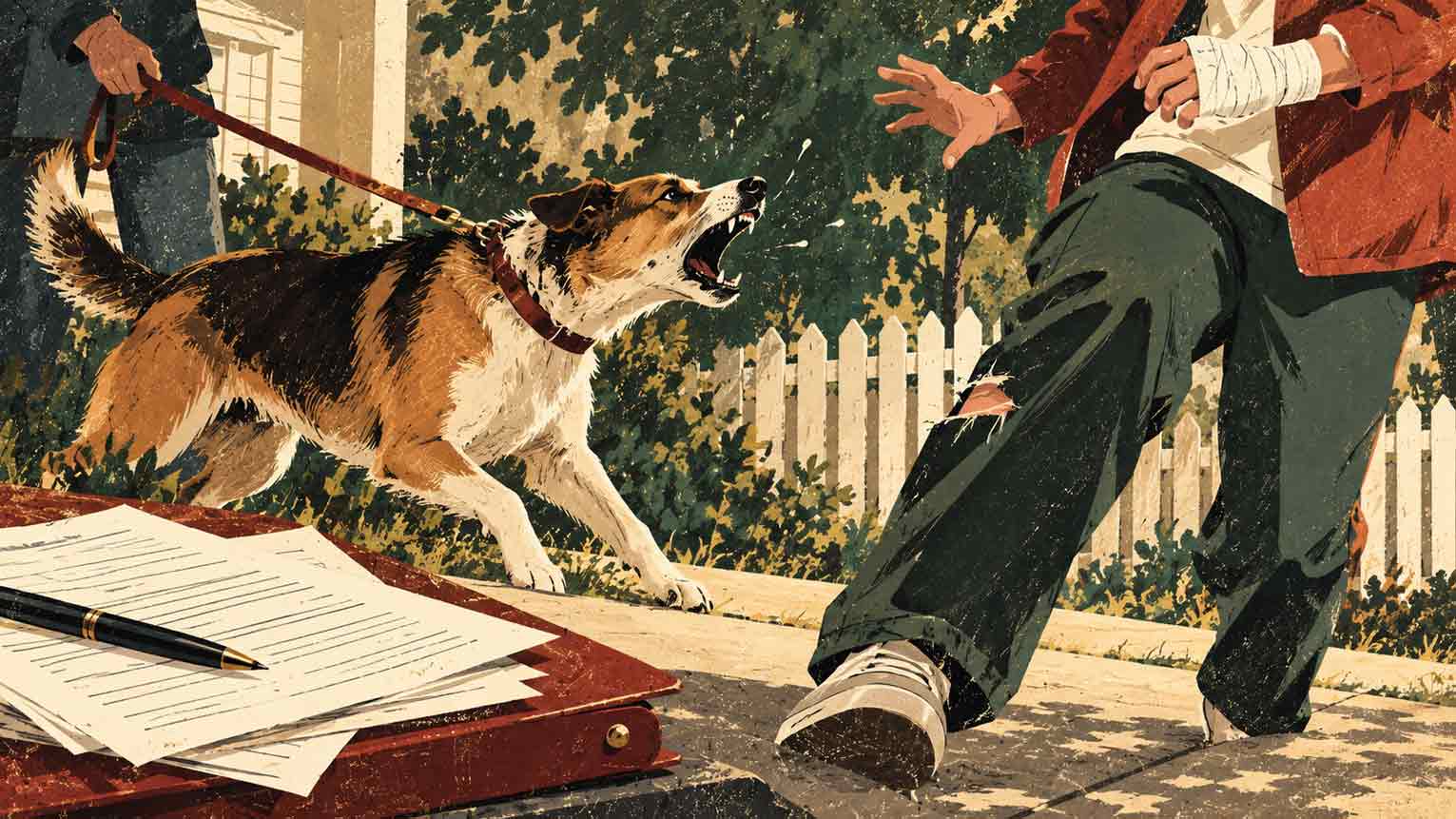
A dog bite claim is a legal demand for compensation filed by someone who has been injured by a dog attack. These claims allow victims to recover damages for medical expenses, lost income, pain and suffering and other losses caused by the incident. Because dog bites can lead to serious physical and emotional harm, the law provides avenues for holding owners accountable in many situations.
Dog bite claims fall under personal injury law and are often governed by specific state statutes. In this guide, we’ll explain what qualifies as a dog bite claim, who can be held liable, what compensation may be available and how the claims process works.
What Qualifies as a Dog Bite Claim?
A dog bite claim arises when a person suffers injury due to a dog’s aggressive behavior. While bites are the most common type of injury, claims can also involve other harm caused by a dog.
Situations that may qualify include:
A dog biting a pedestrian or visitor
A dog attacking a child
A dog knocking someone down and causing injury
A dog injuring another person while off-leash
A dog escaping a fenced yard and causing harm
To succeed in a dog bite claim, the injured person must typically show:
The defendant owned or controlled the dog
The dog caused the injury
The victim suffered damages
In many states, dog bite laws impose strict liability. This means the owner may be responsible even if the dog had no prior history of aggression.
Other states follow a “one-bite rule,” where liability depends on whether the owner knew or should have known the dog was dangerous.
Understanding your state’s specific laws is critical when evaluating a dog bite claim.
Who Can Be Held Liable for a Dog Bite?
Liability usually falls on the dog’s owner, but in some cases, others may share responsibility.
Potentially liable parties include:
The dog owner
A landlord (in certain situations)
A property owner
A dog walker or caretaker
A business owner allowing dogs on premises
For example:
If a landlord knew a tenant’s dog was dangerous and failed to act, they may share liability.
If a dog walker loses control of the animal, they could be responsible.
If a business permits dogs without proper safety precautions, it may face liability.
Factors that influence liability include:
Whether the dog was restrained
Local leash laws
Prior history of aggression
Warning signs posted
The victim’s location at the time of the attack
In some cases, the defense may argue that the victim provoked the dog or was trespassing.
Careful investigation is necessary to determine who is legally responsible.
What Compensation Is Available in a Dog Bite Claim?
Dog bite injuries can range from minor puncture wounds to severe trauma, including permanent scarring and nerve damage.
Compensation may include:
Economic Damages
Emergency medical treatment
Surgery and hospital bills
Rehabilitation or physical therapy
Lost wages
Future medical expenses
Non-Economic Damages
Children are especially vulnerable to serious facial injuries from dog attacks, often requiring reconstructive surgery.
In some cases, victims may also recover compensation for:
Insurance coverage often plays a major role in dog bite claims. Homeowners or renters insurance policies typically cover dog bite liability, though exclusions may apply for certain breeds or circumstances.
How Does Insurance Affect a Dog Bite Claim?
Most dog bite claims are handled through the dog owner’s homeowners or renters insurance policy.
These policies typically provide liability coverage for injuries occurring on or off the property.
Important insurance considerations include:
Insurance companies may attempt to:
Because insurers aim to limit payouts, detailed documentation of medical treatment and emotional impact is essential.
If the owner does not have insurance, recovering compensation may require pursuing personal assets.
What Is the Process for Filing a Dog Bite Claim?
The process begins with seeking immediate medical attention. Dog bites carry a high risk of infection, making prompt treatment critical.
After medical care, important steps include:
Reporting the incident to local authorities or animal control
Identifying the dog and owner
Gathering witness statements
Documenting injuries with photographs
Obtaining medical records
Once liability is established, a claim may be filed with the dog owner’s insurance company.
If negotiations fail to result in a fair settlement, filing a personal injury lawsuit may be necessary.
Strict statutes of limitations apply, and deadlines vary by state.
Taking action promptly helps preserve evidence and protect your legal rights.
Conclusion
A dog bite claim is a legal action seeking compensation for injuries caused by a dog attack. Depending on state law, owners may be held strictly liable or responsible under negligence principles.
Victims may recover compensation for medical expenses, lost income, pain and suffering and emotional distress. Insurance coverage often plays a central role in resolving these claims.
If you or your child has been injured by a dog, consulting an experienced personal injury attorney can help you understand your rights and pursue the compensation necessary for recovery.