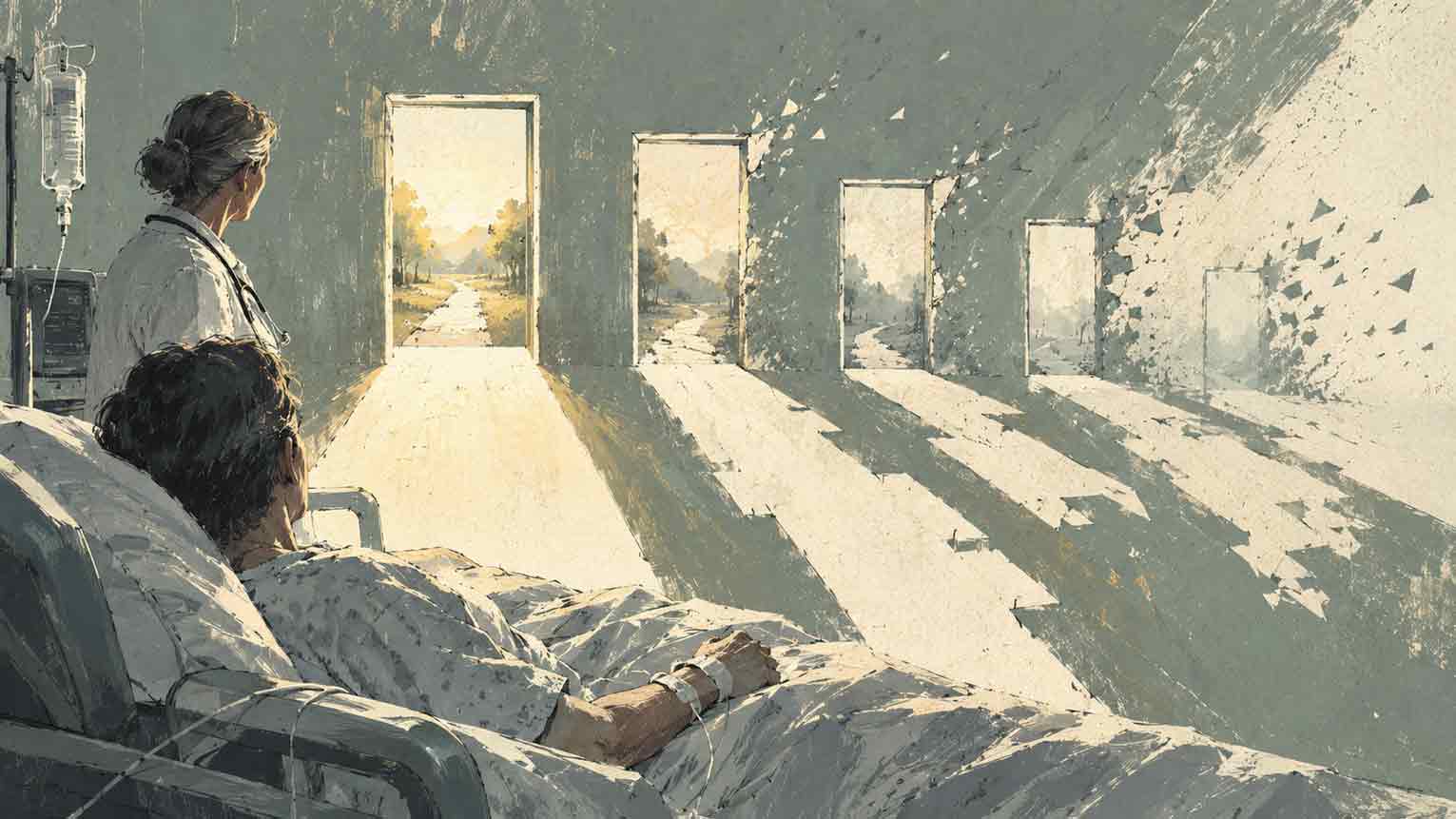
The loss of chance doctrine is a medical malpractice rule that lets a patient recover when a provider’s negligence reduced their chance of survival or a better outcome, even if that chance was already below fifty percent. Instead of requiring proof that negligence probably caused the ultimate harm, it treats the lost chance itself as the injury.
This article explains what the loss of chance doctrine is, the causation problem it solves, how courts calculate proportional damages and why jurisdictions remain sharply split on whether to accept it. Because the doctrine is contested, the article distinguishes the majority and minority positions.
What Is the Loss of Chance Doctrine?
The loss of chance doctrine permits recovery in a medical malpractice case when a provider’s negligence diminished the patient’s probability of survival or recovery. It arose to address cases in which a doctor’s error — a missed cancer diagnosis, a delayed reading of a scan — worsened a patient’s odds, but the patient’s chances were already poor before the negligence occurred. Under traditional causation rules, such a patient often could recover nothing.
The doctrine reframes the injury. Instead of asking whether the negligence caused the death or final harm, it asks whether the negligence caused the loss of a meaningful chance of a better result. That lost chance — a reduction, say, from a 40% survival probability to a 15% one — becomes the compensable injury in its own right. The theory is most closely associated with Herskovits v. Group Health Cooperative and Matsuyama v. Birnbaum.
- The doctrine applies chiefly to medical negligence that worsens a pre-existing risk of death or disability.
- It treats the diminished chance of a better outcome as the injury, not the ultimate harm.
- It allows recovery even when the patient’s odds were below fifty percent before the negligence.
- Leading decisions include Herskovits (Washington) and Matsuyama (Massachusetts).
What Causation Problem Does the Doctrine Solve?
The doctrine solves the “all-or-nothing” causation gap that traditional tort law creates for patients who were already likely to suffer harm. Ordinary negligence causation requires the plaintiff to prove that the defendant’s breach more likely than not caused the injury — a greater-than-fifty-percent showing. A patient whose survival odds were 40% before a negligent misdiagnosis cannot meet that standard, because even competent care would probably not have saved them.
Without the loss of chance doctrine, that patient recovers nothing and a physician whose negligence destroyed a real but sub-majority chance faces no liability. Critics of the traditional rule argue this effectively immunizes malpractice against the sickest patients. The loss of chance doctrine responds by redefining the compensable harm as the lost probability itself, allowing the case to reach a jury.
- Traditional causation demands proof that negligence probably caused the ultimate injury.
- Patients with sub-fifty-percent odds fail that test even when negligence clearly hurt them.
- The all-or-nothing rule can leave the most vulnerable patients without a remedy.
- Loss of chance redefines the injury so that a diminished probability becomes recoverable.
How Are Loss of Chance Damages Calculated?
Most jurisdictions that accept the doctrine calculate damages proportionally, awarding a percentage of the full value of the harm equal to the chance that was lost. This proportional method, endorsed in Matsuyama, multiplies the total damages by the percentage reduction in the patient’s odds. If competent care offered a 40% chance of survival and negligence cut it to 15%, the patient’s estate recovers 25% of the wrongful-death value.
The proportional approach keeps liability tethered to the harm actually caused, avoiding both a windfall full recovery and a complete denial. It also demands precise expert testimony, because the award turns on quantifying the patient’s odds before and after the negligence. A minority of courts instead allow full damages once the plaintiff proves the lost chance was substantial, and still others reject the doctrine entirely. The calculation therefore depends heavily on the jurisdiction.
| Approach | How Damages Are Measured | Effect |
|---|
| Proportional (majority of adopting states) | Full damages multiplied by the percentage of chance lost | Recovery scaled to the lost probability |
| Substantial-factor / full recovery | Full damages if the lost chance was significant | Larger award; less common |
| Rejection | No recovery unless traditional causation is met | Doctrine unavailable |
Why Do Courts Remain Divided on the Doctrine?
Courts remain divided because the doctrine relaxes the traditional burden of proof on causation, and judges disagree about whether that trade-off is sound. Supporters argue it corrects an unjust gap that would otherwise shield negligent providers from liability toward seriously ill patients and would discourage careful treatment of high-risk cases. They view the lost chance as a genuine, valuable interest that tort law should protect.
Opponents counter that the doctrine compensates for statistical possibilities rather than proven injuries, potentially exposing physicians to liability for outcomes they probably did not cause. Some courts also worry about reliable proof, since the doctrine depends on expert testimony quantifying probabilities that can be difficult to establish and easy to contest. Several courts have added that expanding liability in this way is a policy judgment better suited to the legislature than to the common law. As a result, adoption is roughly split, and even among adopting states the mechanics differ.
- Some states adopt the doctrine with proportional damages, the most common approach.
- Others adopt it but allow full recovery when the lost chance was substantial.
- Several states reject it and require traditional greater-than-fifty-percent causation.
- A few limit it to specific contexts, so counsel must check the controlling precedent.
Conclusion
The loss of chance doctrine allows a patient to recover in medical malpractice when negligence reduced their chance of survival or a better outcome, even where that chance began below fifty percent. It solves the all-or-nothing causation gap by treating the lost probability as the injury, and most adopting states award damages proportional to the chance destroyed, following Herskovits and Matsuyama. Because jurisdictions remain genuinely split on whether and how to apply it, practitioners should confirm the governing rule and the required expert proof before pursuing a loss of chance theory.
Frequently Asked Questions