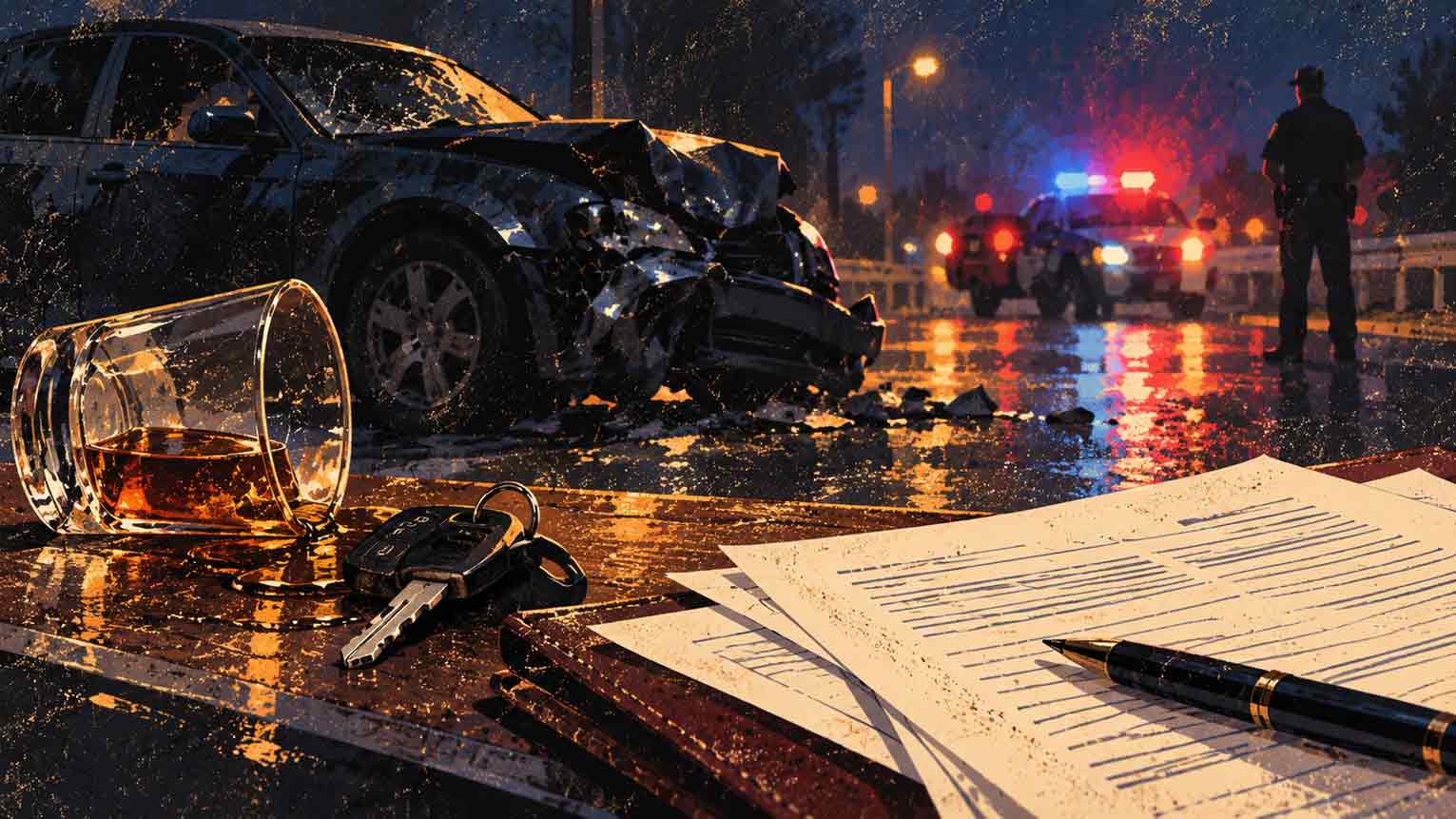
A drunk driving accident claim is a legal action filed by someone injured in a crash caused by an intoxicated driver. These claims allow victims to seek compensation for medical bills, lost income, pain and suffering and other damages resulting from the collision. Because driving under the influence is both illegal and reckless, drunk driving cases often involve serious injuries and significant legal consequences.
If you or a loved one has been hurt by an impaired driver, understanding how a drunk driving accident claim works is essential. Below, we’ll explain what qualifies as a claim, who may be liable, what compensation may be available and how these cases differ from typical car accident claims.
What Qualifies as a Drunk Driving Accident Claim?
A drunk driving accident claim arises when a driver operates a vehicle while impaired by alcohol or drugs and causes an accident. In legal terms, driving under the influence (DUI) is considered negligence — and often negligence per se — because it violates traffic safety laws.
Common scenarios that qualify include:
A driver exceeding the legal blood alcohol concentration (BAC) limit
A driver impaired by prescription or illegal drugs
A collision caused by reckless driving linked to intoxication
A pedestrian struck by an impaired motorist
A fatal crash caused by a drunk driver
To succeed in a drunk driving accident claim, the injured party must typically prove:
Evidence of intoxication may include:
Police reports
Breathalyzer or blood test results
Field sobriety test results
Witness statements
Dashcam or bodycam footage
Because DUI laws establish clear safety standards, proving fault can sometimes be more straightforward than in other accident cases.
Who Can Be Held Liable in a Drunk Driving Accident?
The intoxicated driver is usually the primary party responsible. However, additional parties may share liability in certain situations.
Potentially liable parties include:
The drunk driver
A bar or restaurant that overserved alcohol (under dram shop laws)
A social host who knowingly served alcohol to minors
An employer (if the driver was working at the time of the crash)
Dram shop laws allow injured victims to pursue claims against businesses that served alcohol to visibly intoxicated individuals who later caused harm.
For example:
If a bar continued serving alcohol to a clearly impaired patron who then caused a crash, the bar may be partially liable.
If a company employee was driving under the influence during work duties, the employer could face liability under vicarious liability principles.
Identifying all responsible parties is critical to maximizing compensation.
What Compensation Is Available in a Drunk Driving Accident Claim?
Drunk driving accidents often result in severe injuries due to reckless behavior such as speeding or running red lights.
Compensation may include:
Economic Damages
Medical expenses
Future medical treatment
Lost wages
Loss of earning capacity
Property damage
Non-Economic Damages
In drunk driving cases, punitive damages may also be available. Punitive damages are designed to punish especially reckless conduct and deter similar behavior.
Factors affecting compensation include:
Because drunk driving is considered particularly dangerous conduct, courts may award substantial damages in egregious cases.
How Does Insurance Work in a Drunk Driving Accident Claim?
Most drunk driving accident claims begin with a claim against the at-fault driver’s auto liability insurance.
However, insurance companies may:
If the driver lacks sufficient insurance coverage, victims may also pursue compensation through:
Uninsured or underinsured motorist coverage
Dram shop liability policies
Personal assets of the driver
In some cases, criminal restitution may be ordered as part of a DUI conviction, but this is separate from a civil personal injury claim.
Filing a civil claim allows victims to seek full compensation beyond what criminal courts may provide.
How Is a Drunk Driving Accident Claim Different From Criminal Charges?
A drunk driving accident can result in both criminal and civil proceedings.
The criminal case:
Is prosecuted by the state
Seeks penalties such as fines or jail time
Requires proof beyond a reasonable doubt
The civil claim:
Is filed by the injured victim
Seeks financial compensation
Requires proof by a preponderance of the evidence
Even if the driver is acquitted in criminal court, a victim may still succeed in a civil lawsuit.
Conversely, a DUI conviction can strengthen a civil claim by supporting proof of negligence.
The two processes operate independently but may share evidence.
Conclusion
A drunk driving accident claim is a legal action seeking compensation after an impaired driver causes injury or death. Because driving under the influence violates safety laws, these cases often involve clear evidence of negligence.
Victims may recover damages for medical costs, lost wages, pain and suffering, and, in some cases, punitive damages. Additional liability may extend to bars, restaurants or employers under certain circumstances.
If you or a loved one has been harmed by a drunk driver, consulting with an experienced personal injury attorney can help you understand your rights and pursue the full compensation available under the law.